Mr. Tan recently posted on his social media about newly arrived imported red wine with the caption "Direct overseas sourcing, quality guaranteed"; while Mr. Tan same type of red wine is labeled "Professional agency, worry-free channels". The same product, with different import methods behind it, what commercial logic is hidden? Today we will unveil the mystery of agency import and self-operated import.
I. Concept Definition: The Essential Differences Between Two Import Modes
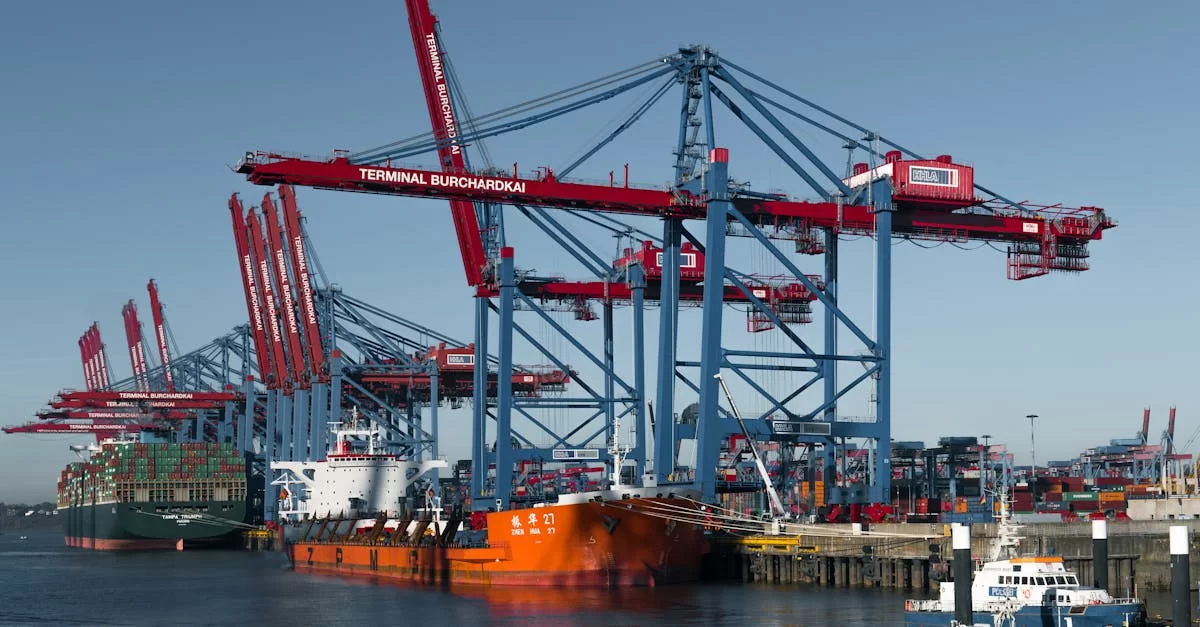
Agency Import is like hiring a professional buyer: a company entrusts professional organizations such as Zhongmaoda to complete the entire process of customs declaration and logistics, and obtains goods after paying service fees. The advantages are:
- Rapid launch of overseas business with zero experience
- Avoid professional risks such as customs clearance and taxation
- Lower initial capital pressure
Self-Operated Import is like personally going abroad to purchase: the company establishes its own overseas team to control everything from product selection to customs clearance. Its core competitiveness lies in:
- Control pricing power and supply chain discourse power
- Can create exclusive product lines
- Long-term cost advantages
II. The Dilemma of Choice: 5 Key Decision Dimensions
The founder of a mother and baby brand once calculated: the cost of agency import per can of milk powder is 15% higher, but the fixed annual expenditure of the self-operated team exceeds 2 million. How should one choose?
Capital strength is the primary consideration. Agency mode usually settles on a per-order basis, while self-operation requires advance payment for overseas goods and warehousing costs. If the working capital is less than 5 million, it is recommended to start with agency.
Professional capability determines the risk coefficient. In professional fields such as HS code classification and certificate of origin, one declaration error can lead to the detention of the entire batch of goods. For companies without a professional foreign trade team, agency is more secure.
Business scale affects marginal costs. When the monthly procurement volume exceeds 20 containers, the agency fees saved by self-operation can cover the team's costs. There is a simple calculation formula: (Agency Fee Rate × Annual Procurement Amount) > Annual Expenditure of Self-Operated Team.
III. Hybrid Strategy: The Third Choice for Smart Businesses
More and more companies are adopting a transitional solution of "agency to self-operation":
- Phase 1: Test the waters with agency for all product categories
- Phase 2: Transition to self-operation for core product categories
- Phase 3: Retain agency for non-standard products
A home furnishing brand, through this method, increased its self-operation ratio from 0 to 70% within three years, while retaining agency channels to handle the import of artworks with special materials. This flexible strategy controls risks while gradually building core competitiveness.
IV. Future Trends: Mode Innovation Driven by Digitalization
With the development of cross-border payments and intelligent customs declaration systems, the boundaries between the two modes are blurring. Through Zhongmaoda's "Digital Customs Clearance" service, self-operated companies can now enjoy the convenience of some agency services, and agency companies are beginning to provide value-added services such as product selection big data.
It is worth noting that the popularity of overseas warehouses allows the agency mode to achieve "weekly replenishment", and blockchain traceability technology makes the quality control advantage of self-operated enterprises no longer absolute. The winners of the future will be those who can flexibly combine the two modes.
Your Import Business Needs an Upgrade
Back to the opening question: Mr. Tan self-operated red wine indeed has higher profits, but Mr. Tan has expanded to 5 countries through agency channels. There is no absolutely correct answer, only the choice that best suits the current stage of development.
Why not take a test: If you suddenly need to import a batch of a completely new category of goods tomorrow, can your current team complete the compliant declaration within 72 hours? The answer will reveal your true level of preparedness. Welcome to share your import stories in the comment section, perhaps the inspiration for the next mode innovation is hidden there.

Recent Comments (0) 0
Leave a Reply