In the vast arena of international trade, the concepts of re-export trade and transit trade often cause some confusion. Today, let us delve into these two forms of trade together, lift the veil of mystery, and see what characteristics and differences they truly possess.
I. What is Re-export Trade?
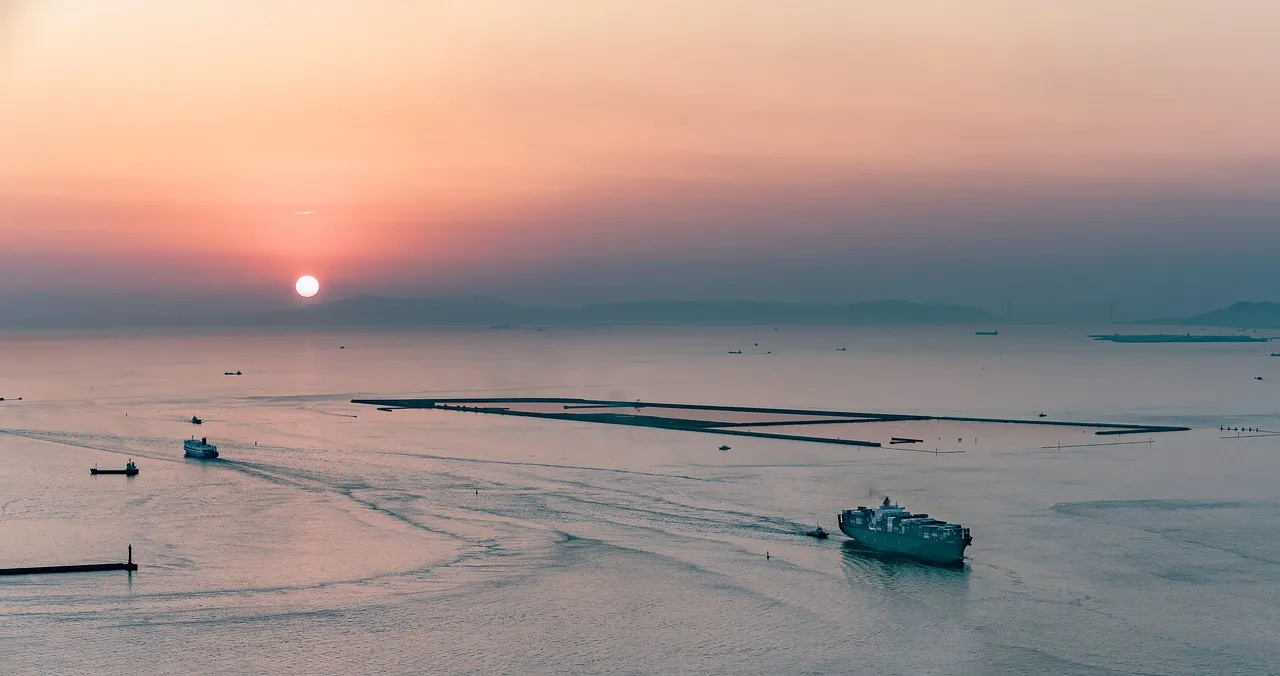
Re-export trade, in simple terms, is when the country of production sells goods to a re-exporting country, and then the re-exporting country sells these goods to the consuming country. The re-exporting country here acts as a "transit hub," it does not carry out substantial processing or production of the goods, but rather utilizes its own trade advantages, such as superior geographical location, relaxed trade policies, etc., to facilitate the completion of this trade.
For example, Mr. Qin company produces a batch of unique handicrafts in Country A. However, exporting directly from Country A to Country C might face some trade barriers or high taxes. At this point, Country B, as a re-exporting country, plays a role. Mr. Qin first sells the handicrafts to Zhongmaoda Company in Country B, and Zhongmaoda Company then resells them to customers in Country C. In this way, through the re-export operations of Country B, some unfavorable factors can be circumvented, and the smooth circulation of goods can be achieved.
II. Characteristics of Transit Trade
Transit trade is somewhat different. It refers to trade activities where goods, en route from the country of production to the country of consumption, pass through a third country, and are then continued to be transported to the country of consumption under the supervision of the third country's customs, without undergoing substantial processing. The third country here merely provides a passage for the goods to transit.
For instance, Mr. Qin Country D produces a batch of high-quality textiles to be exported to Country E. However, the transportation route may need to pass through Country F. When this batch of textiles arrives in Country F, under the supervision of Country F's customs, it only makes a brief stop before continuing its journey to Country E. Country F does not participate in the buying and selling aspect of this trade; it simply allows the goods to pass through its territory. This is transit trade.
III. What are the Differences Between Them?
- Firstly, in terms of trading parties, re-export trade involves a buyer-seller relationship between the producing country, the re-exporting country, and the consuming country. Transit trade, on the other hand, is primarily a trade between the producing country and the consuming country, with the third country merely providing a transit channel and not participating in the transaction.
- Secondly, regarding the handling of goods, the re-exporting country may perform simple processing such as repackaging or sorting of the goods. However, in transit trade, the third country generally does not carry out any substantive processing of the goods.
- Finally, from a trade objective perspective, the re-exporting country aims to earn profits such as price differentials through reselling. The third country in transit trade primarily facilitates the trade between the other two countries based on factors like geographical location.
IV. What is the Significance of Understanding Them?
For businesses, understanding the differences between re-export trade and transit trade allows them to choose more suitable trade methods based on the characteristics of their products, target markets, and the prevailing trade environment. For example, when encountering trade barriers, re-export trade might be an option to overcome difficulties. For countries or regions geographically situated on trade routes, properly developing transit trade can promote the development of their logistics and related industries.
In conclusion, although re-export trade and transit trade are both special forms of international trade, they have their own distinct operating models and characteristics. Only by deeply understanding them can one better seize opportunities and make wise decisions in the tide of international trade. We hope that in your future trade activities, you can flexibly apply these two trade methods in conjunction with the actual situation. We also welcome everyone to share their insights and experiences on these two trade methods in the comments section.

Recent Comments (0) 0
Leave a Reply