In the dynamic and challenging field of import and export trade, every aspect of an import and export trading company receives considerable attention. Today, we will focus on a seemingly ordinary yet intricate topic—the area of an import and export trading company. What impact does this factor truly have on a company's operations and development? Let us delve into it together.
I. Office Area: Team Collaboration and Image Presentation
For an import and export trading company, the size of the office area first and foremost concerns team collaboration efficiency. Sufficiently spacious office space can provide employees with a comfortable working environment, preventing the sense of oppression caused by cramped conditions, thereby enhancing employee work enthusiasm. For example, if different functional departments such as business, finance, and logistics can be reasonably arranged in a relatively spacious area, communication and collaboration among departments will be more convenient and efficient, and daily work processes such as document transfer and meeting discussions can proceed more smoothly.
At the same time, the office area is also an important window for presenting the company's image. When partners and clients visit, a grand, tidy, and appropriately sized office space will undoubtedly leave a good first impression, indirectly reflecting the company's strength and professionalism. Zhongmaoda Company is well aware of this; by reasonably planning its office area, it not only ensures employee comfort but also demonstrates a positive corporate image in business receptions.
II. Warehouse Area: Cargo Storage and Supply Chain Assurance
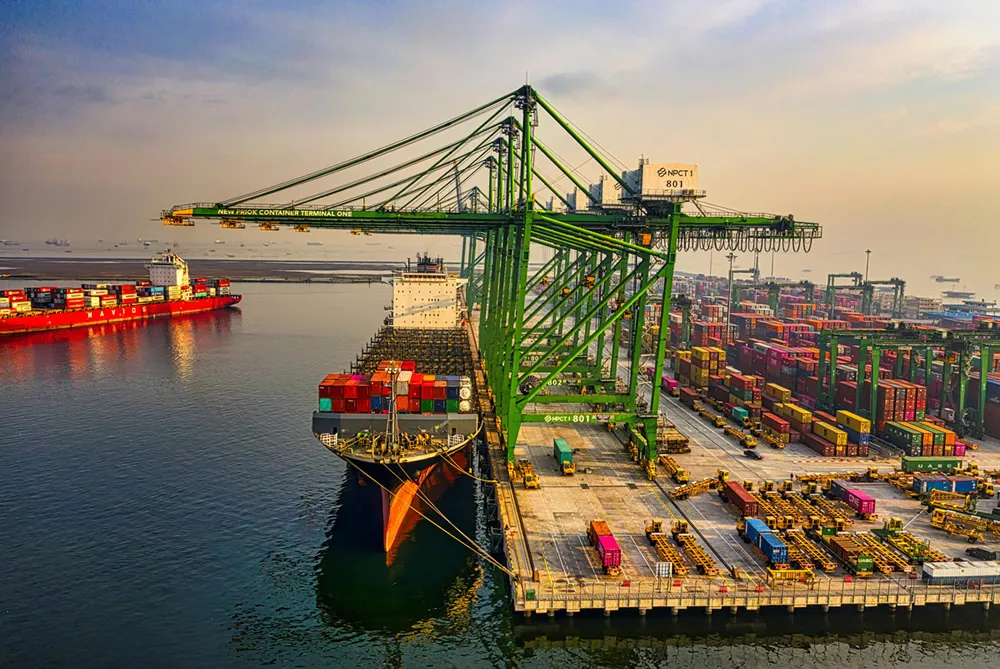
Import and export trade is inseparable from the storage and circulation of goods, making warehouse area crucial. Sufficient warehouse space ensures that the company has enough room to store various import and export goods, preventing goods from accumulating in inconvenient transit locations like ports and docks due to insufficient storage, which would then affect the operational efficiency of the entire supply chain.
Furthermore, different types of goods may have different requirements for the storage environment; for example, some need constant temperature and humidity, while others require special shelving arrangements. A larger warehouse area allows the company more flexibility in warehouse layout and management, meeting diverse cargo storage needs and ensuring the quality and safety of goods. Zhongmaoda, in its warehouse area planning, fully considered its business characteristics, achieving efficient cargo storage and supply chain operations through reasonable allocation of warehousing resources.
III. Comprehensive Consideration: Balancing Cost and Development
However, when import and export trading companies determine their space scale, bigger is not always better; cost factors must also be comprehensively considered. Whether it's the leasing fees for office premises or the construction and leasing costs for warehouse facilities, these are significant expenses. If a company blindly pursues a large area beyond its actual business needs, it may lead to resource waste, increase unnecessary operating costs, and put pressure on the company's financial situation.
Therefore, it is essential to find a balance between cost and area while meeting business development needs. As the company's business expands and changes, space requirements may also vary accordingly, necessitating that company management possesses keen insight and flexible decision-making abilities to adjust the space scale in a timely manner to adapt to new development situations. Just like Zhongmaoda Company, it regularly evaluates its space needs and makes reasonable adjustments based on actual business conditions to ensure sustainable development on a controllable cost basis.
In summary, the issue of import and export trading company area is not merely about numerical size; it involves numerous aspects such as office collaboration, cargo storage, cost control, and corporate image. Every import and export trading company should carefully consider and reasonably plan its space scale based on its business characteristics, development plans, and other factors, in order to gain a firm footing in fierce market competition and achieve long-term development. So, dear readers, how do your companies or the import and export trading companies you know approach space planning? We welcome everyone to discuss and share!

Recent Comments (0) 0
Leave a Reply