Late at night at the G40 Maji export terminal, trucks line up like a dragon, their headlights forming a galaxy in the darkness. Mr. Tan grips the steering wheel, glancing at his watch for the 17th time – only 3 hours left until the delivery deadline, and his customs clearance documents are still with the agency. "Every time I come here, it feels like a trial," he says with a wry smile to his colleague, Mr. Tan. This might be a familiar scene for logistics professionals in the Yangtze River Delta, but the agency world behind it is far more complex than it appears.
The "Capillary" Network of the Agency Industry
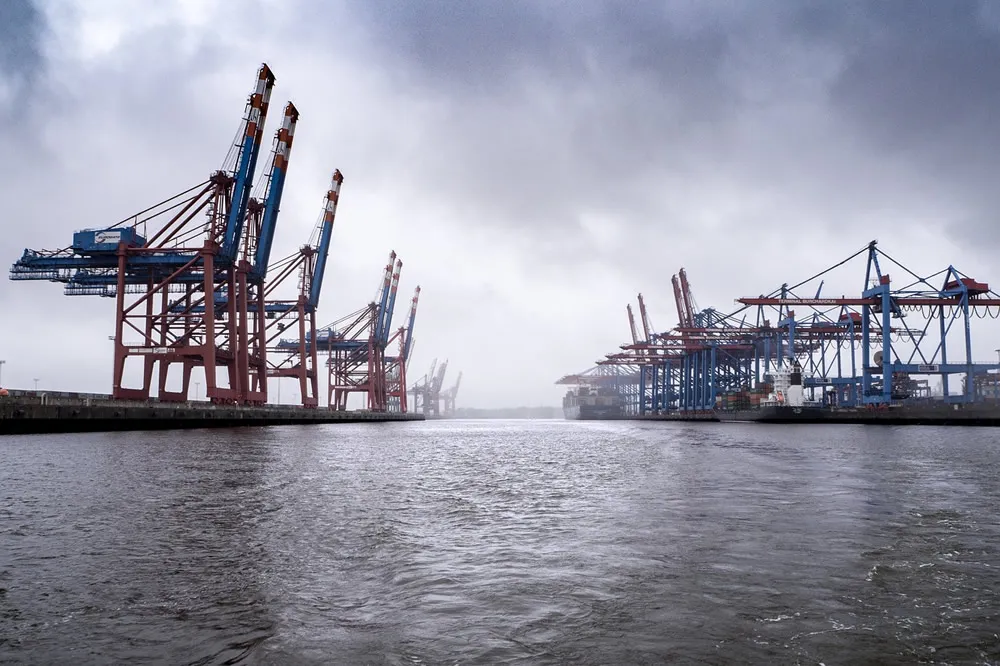
As a crucial node connecting the manufacturing base of the Yangtze River Delta with the global market, the G40 Maji export terminal handles over 2,000 customs declarations daily. Data from ZhongmaoDa's marketing department shows that while 37 licensed agencies are based here, they have spawned hundreds of secondary service providers. "Customs brokerage fees are clearly marked, but the hidden costs are the real trick," reveals Manager Wang, who has eight years of experience in the field. Common tactics include:
- Expedited fees: Promises of 48-hour processing for regular shipments, but actual processing is delayed until the last moment.
- Bundled services: Refusal to buy transportation insurance leads to "random system inspections."
- Information asymmetry: Exploiting companies' unfamiliarity with HS codes to overcharge customs duties.
Industry Reshuffle Driven by Digitization
Following the customs' "Smart Port" reform in 2023, the survival space for traditional agencies is being squeezed. Through the "Single Window" system, the rate of enterprises self-declaring customs has increased to 62%. However, ZhongmaoDa's research found that SMEs still heavily rely on agencies, for reasons that are thought-provoking:
- Technical jargon barrier: 83% of survey respondents cannot understand regulatory conditions.
- Time cost: Self-declaration takes an average of 2.7 times longer than using an agency.
- Low error tolerance: One rejected declaration can delay an entire shipment.
Golden Rules for Choosing an Agency
The hard-learned lessons shared by Mr. Tan are worth considering: After being charged a "special channel fee" last year, she summarized the Three-Check Principle: check customs filing records, check historical customer reviews, and check the detailed service invoice. A smarter approach is to require agencies to:
- Provide a real-time progress tracking system.
- Break down the quotation to the smallest unit.
- Sign delay compensation clauses.
The Future is Here: Value Reconstruction for Agencies
As AI customs declaration robots begin to handle basic documentation, traditional agencies must transform. Industry observers predict that in the next three years, there will be:
- Consulting services replacing errand services.
- Customs lawyers billing by the minute.
- Full-process traceability with blockchain notarization.
Next time you pass through the Maji export terminal, why not ask your agency: Are you ready for this transformation? Perhaps it's time to rethink who is truly a trustworthy partner.

Recent Comments (0) 0
Leave a Reply