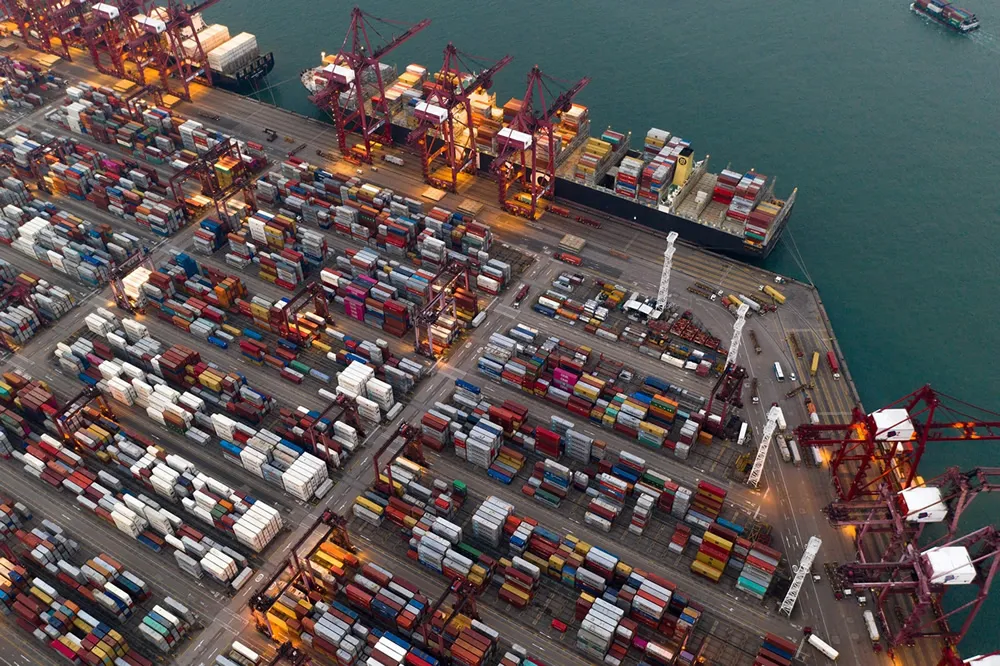
Late at night at Qingdao Port, a cargo ship from Bordeaux is slowly docking. The oak barrels sleeping in the containers, carrying the Cabernet Sauvignon brewed by the Mediterranean sun, are about to appear on the tables of North China through the network of Qingdao wine import agents. This city, famous for its beer, is quietly becoming a northern hub for imported red wine.

Why has Qingdao become the northern gateway for imported red wine?
According to industry data, Qingdao Port’s wine import volume in 2022 increased by 37% year-on-year, far exceeding the national average. Mr. Zhang, an agent with ten years of experience, frankly said: "Qingdao’s geographical advantage is like a natural decanter—"
- Port advantage: The only deep-water port in North China capable of docking 200,000-ton container ships.
- Policy dividend: The Pilot Free Trade Zone simplifies customs clearance procedures for imported alcoholic beverages.
- Consumption potential: Shandong’s per capita GDP exceeding $12,000 has led to consumption upgrades.
Three Hidden Thresholds for Import Agencies
Ms. Li’s company suffered heavy losses in 2021 when it attempted to start a red wine import business due to overlooking these details:
- Qualification labyrinth: 12 essential documents including Food Business Permit and Imported Food Filing.
- Tariff trap: The difference in tax rates between different countries of origin can reach 48% (e.g., Chile vs. Australia).
- Warehousing crisis: Temperature-controlled warehouses are 3 times more expensive than ordinary ones but essential.
The "Three-Cup Rule" to Solve Product Selection Difficulties
The selection strategy summarized by a senior buyer is worth learning from:
- The first cup examines the appellation endorsement: Indicating legally designated appellations such as French AOC and Italian DOCG.
- The second cup tests market matching: North China consumers prefer blended wines with soft tannins.
- The third cup calculates circulation efficiency: Young brands need to reserve 30% of the marketing budget.
Channel Transformation Driven by Digitalization
After a Qingdao agent implemented a mini-program allowing B-end customers to place orders independently, the average monthly shipment volume increased by 210%. The industry is currently undergoing:
- The proportion of traditional wholesale markets has dropped from 85% to 62%.
- Community group buying channels have an annual growth rate of 140%.
- Live e-commerce has fueled demand for "ready-to-drink" small bottles.
The Next Five Years: Red Ocean or Blue Ocean?
As the last drop of red wine slides into the decanter, we can’t help but wonder: this seemingly romantic industry is undergoing a transformation from extensive agency to refined operations. Perhaps, as the French winemaker said: "Wine needs not only professional agency but also the patience to wait." Are you ready to participate in this game of time? Welcome to share your insights in the comment section.

Commentaires récents (0) 0
Laisser un commentaire