Hong Kong, this extraordinarily charming Pearl of the Orient, has a re-export trade history that is like a magnificent epic. The rise of Hong Kong's re-export trade was not accidental; its unique geographical location laid a solid foundation. Situated in South China, backed by the vast Chinese mainland, and facing Southeast Asia and the world's major oceans, it served as a crucial hub connecting East and West trade.
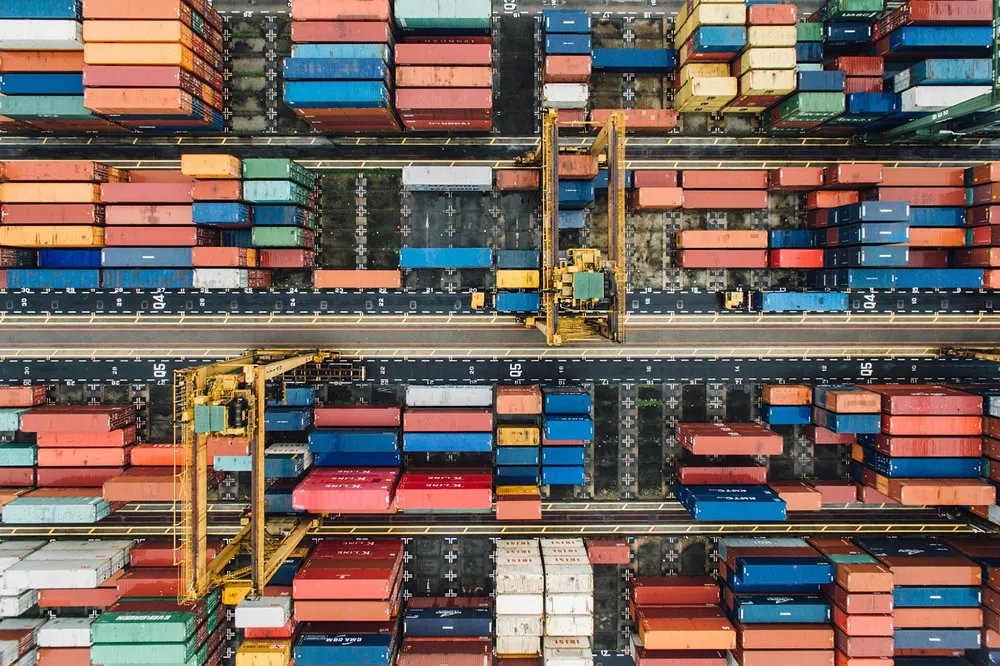
As early as the colonial period, Britain regarded Hong Kong as an important stronghold for expanding Far East trade. At that time, Hong Kong, with its excellent natural harbor conditions such as Victoria Harbour, deep and wide, provided ideal berthing and loading/unloading facilities for large merchant ships. Numerous foreign merchant ships flocked to Hong Kong, making it an ideal transit point for goods, thus commencing Hong Kong's re-export trade.
The Golden Age of Development
The 1950s to the 1970s can be described as the golden age of Hong Kong's re-export trade. At that time, the global economic landscape was undergoing profound changes, and Asian economies were gradually rising. Due to a specific historical period, mainland China had relatively limited external trade channels, and Hong Kong, leveraging its free port policy advantages, served as a bridge for trade communication between mainland China and the world.
During this period, the variety of goods in Hong Kong's re-export trade became increasingly diverse. From textiles and handicrafts from mainland China to machinery and electronic equipment from all over the world, all transited through Hong Kong. Extensive trade activities spurred the vigorous development of related industries in Hong Kong, such as finance, shipping, and warehousing. For instance, Hong Kong's port loading and unloading efficiency continuously improved, and financial institutions also provided diverse financing services for trade, further solidifying Hong Kong's position as a re-export trade center.
Transformation and Challenges
However, with the changing times, Hong Kong's re-export trade also faced numerous challenges and transformation needs. Since the 1980s, mainland China's reform and opening-up accelerated, coastal cities successively established special economic zones, and external trade gradually became direct. Concurrently, the rise of neighboring port cities such as Singapore and Kaohsiung also created a competitive environment for Hong Kong's re-export trade.
Facing these challenges, Hong Kong actively sought transformation. On the one hand, it strengthened industrial cooperation with mainland China, promoting trade upgrading from simple goods re-export to high-value-added trade services, such as providing trade consulting and supply chain management services. On the other hand, it expanded into emerging markets and strengthened trade ties with countries and regions along the "Belt and Road" initiative, injecting new vitality into re-export trade.
Outlook for the Future
Looking back at the history of Hong Kong's re-export trade, it has witnessed Hong Kong's prosperity and development. Today, under new historical opportunities, Hong Kong should continue to leverage its strengths and strengthen cooperation with mainland China and the world. We believe that through continuous innovation and transformation, Hong Kong's re-export trade will undoubtedly continue to write glorious chapters in the future, injecting strong impetus into Hong Kong's sustained economic development and contributing unique strength to the prosperity of global trade. Let us collectively anticipate Hong Kong's re-export trade to shine with even greater brilliance in the new era.

Recent Comments (0) 0
Leave a Reply