In today's era of increasingly frequent globalized trade, many businesses and individuals are involved in import operations. Import customs clearance is like an unavoidable checkpoint, and the associated costs are a focal point of everyone's concern. So, how much does import customs clearance really cost? This is not a simple number that can answer it.
Tariffs and Value-Added Tax
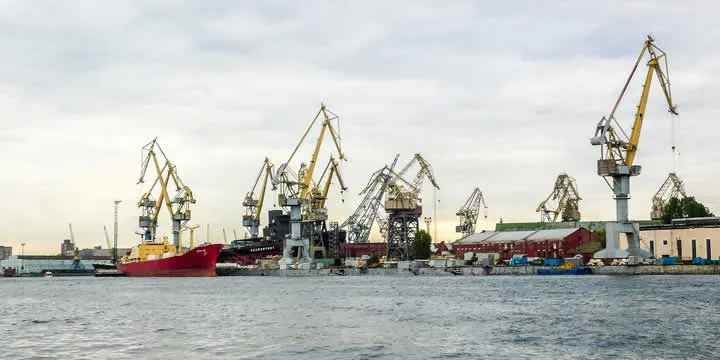
Firstly, tariffs are a more significant component of import customs clearance costs. The tariff rate depends on factors such as the classification of the goods and their country of origin. Different types of goods have vastly different tariff rates. For example, common daily necessities and high-end electronic products have completely different tariff rates. Commodity classification follows the Harmonized System of Nomenclature and Coding of Goods, where customs accurately classify goods based on their characteristics, uses, and then apply the corresponding tax rate. For instance, Mr. Mao imports a batch of clothing from Southeast Asia, assuming its value is 100,000 RMB, and the tariff rate for this category of clothing is 10%, then only the tariff to be paid is 10,000 RMB.
In addition to tariffs, value-added tax (VAT) is also an important component. The VAT rate is generally 13% or 9%, depending on the product category. Continuing with the example, after paying the tariff, the base for calculating VAT is the value of the goods plus the tariff, which is 100,000 + 10,000 = 110,000 RMB. If the VAT rate for this clothing is 13%, then the VAT to be paid is 110,000 × 13% = 14,300 RMB.
Customs Declaration Fees and Other Miscellaneous Fees
Customs declaration fees are service fees charged by customs brokers for declaring to customs. Generally, customs brokers' fee standards are flexible, priced comprehensively based on the complexity of the goods, declaration amount, etc., usually ranging from several hundred to several thousand RMB. Suppose Mr. Mao imports a batch of handicrafts, and the customs broker charges a customs declaration fee of 2,000 RMB based on the situation of the goods.
There are also port fees, such as terminal handling charges, loading and unloading fees, etc. These fees vary depending on the port and are calculated based on the weight and volume of the goods. For example, at a large port, miscellaneous port fees for large machinery equipment might reach around 5,000 RMB.
Furthermore, inspection and quarantine fees for goods cannot be overlooked. For certain specific goods, such as food and cosmetics, inspection and quarantine requirements are strict, and the fees are relatively high. For example, for a batch of imported food, inspection and quarantine fees may be charged as a certain percentage of the goods' value. Assuming a value of 500,000 RMB and a rate of 0.3%, the inspection and quarantine fee would be 1,500 RMB.
Transportation and Warehousing Costs
The transportation cost of goods from abroad to domestic ports is a considerable expense. The costs vary significantly depending on the mode of transportation; sea freight is relatively cheap, while air freight is more expensive. For example, importing a batch of furniture from Europe, sea freight might cost 8,000 RMB, while air freight could be as high as over 30,000 RMB.
If the goods cannot be picked up in time during the customs clearance process for various reasons, warehousing fees will be incurred. Warehousing fees are calculated based on the storage time and the space occupied by the goods. In warehouses at some busy ports, the daily warehousing fee per cubic meter may be around 5-10 RMB.
Comprehensive Consideration, Accurate Calculation
Import customs clearance costs are a complex system involving numerous items. Before importing, businesses and individuals must fully understand the calculation methods and standards of each fee. You can consult professional customs clearance agencies, such as Zhongmaoda, in advance to have them perform an estimated calculation based on specific goods and trade conditions. Only in this way can you plan costs rationally in import operations and avoid economic losses due to unclear customs clearance costs. Therefore, the next time you face import customs clearance, you must treat the cost issue with caution and be fully prepared.

Recent Comments (0) 0
Leave a Reply