In the complex and ever-changing field of international trade, the term "re-export" often appears, yet many people have only a vague understanding of its true meaning. Today, let us delve into what re-export truly means and unveil its mysterious veil.
Basic Concepts of Re-export
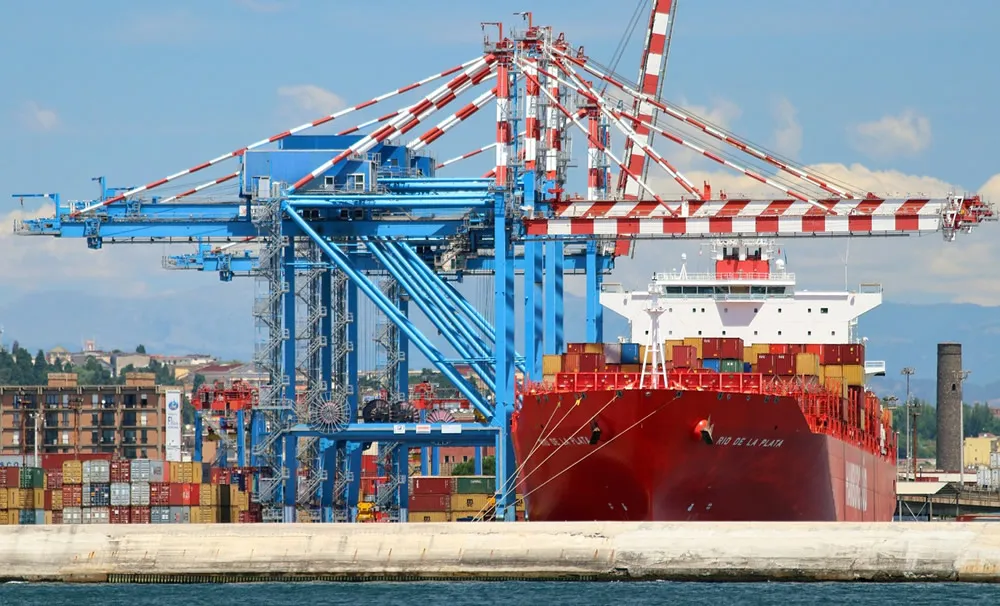
Re-export trade, also known as transit trade, refers to international trade where the buying and selling of imported and exported goods are not conducted directly between the producing country and the consuming country, but rather through a third country. This mode of trade involves three parties: the producing country, the transit country, and the consuming country. For example, country A produces a certain commodity, which is first shipped to transit country B, and then from B to consuming country C. In this process, transit country B plays the role of re-export.
The biggest difference between re-export trade and direct trade lies in the cargo transportation route and transaction process. Direct trade involves the producing country directly selling goods to the consuming country, while re-export trade adds an intermediate transit link. Taking electronic products as an example, suppose China is the producing country, the United States is the consuming country, and Singapore is the transit country. Electronic products from China are first transported to Singapore, undergo some processing (possibly simple packaging changes, relabeling, etc.), and then shipped to the United States. This is a typical re-export trade process.
Operation Process of Re-export Trade
- First is the trade negotiation stage. Traders in the transit country communicate separately with suppliers in the producing country and buyers in the consuming country to negotiate terms such as price, quantity, and quality of goods. For example, Mr. Ye, as a trade representative of Zhongmaidah Company in the transit country, negotiates cargo supply details with Mr. Ye, who represents the supplier from the producing country, and at the same time, confirms procurement needs with the buyer in the consuming country.
- Next is cargo transportation. Goods are transported from the producing country to the transit country, usually entering special areas such as bonded zones in the transit country. Within the bonded zone, goods can enjoy certain tax preferential policies, and import duties and other taxes do not need to be paid immediately.
- Then comes cargo processing and re-export. In the transit country, traders may perform simple operations such as processing, packaging, and sorting on the goods to make them better meet the market demand of the consuming country. After that, the goods are shipped to the consuming country.
Reasons for the Existence of Re-export Trade
From a customs duty perspective, tariff policies vary greatly among different countries. Some countries, in order to encourage the development of specific industries or attract foreign investment, set lower tariffs or even duty-free policies for certain goods. For example, some free trade ports, such as Hong Kong and Singapore, have highly developed re-export trade due to their preferential tariff policies. By transiting through these regions, traders can reduce overall tariff costs.
Trade barriers are also an important factor. There may be trade restrictions, quotas, and other barriers between some countries. For example, there may be trade friction between two countries, where one country imposes high tariffs or import restrictions on certain goods from the other. In such cases, re-export trade, by using a third country without trade barriers for transit, can circumvent these restrictions and allow trade to continue.
Impact of Re-export Trade
For the transit country, re-export trade can bring many benefits. It can increase the trade volume of the transit country, promote the development of related industries such as ports and logistics, and create employment opportunities. For instance, Singapore, with its superior geographical location and favorable trade policies, has seen significant contributions from re-export trade to its economic development. However, if re-export trade is not operated properly, it may also lead to some problems, such as disrupting normal trade order and distorting trade data.
In today's globalized world, understanding the meaning and operation of re-export trade is crucial for businesses to expand into international markets and reasonably avoid trade risks. We hope that through the introduction of this article, you have gained a clearer understanding of re-export trade, and you are welcome to share your re-export trade cases encountered in international trade in the comment section and discuss more related knowledge together.

Recent Comments (0) 0
Leave a Reply