"I got quotes from three agent companies, and the service content was identical, but the prices differed by twofold!" Mr. Jia cross-border e-commerce venture had just started when she fell into the trap of export agents. There's an old saying in the foreign trade industry: Choose the right agent, and half your order is successful. But faced with a myriad of service providers in the market, which one is truly strong, and which one has deep-seated schemes? This article will use real cases to deconstruct the selection logic, helping you see through promotional rhetoric to understand the essence.
I. Scale ≠ Reliability, These Indicators Are Key

Mr. Jia once blindly believed in "industry leaders," but the other party's over-expansion led to customs declaration delays, costing him 170,000 in liquidated damages. Data from Zhongmaoda Foreign Trade Research Institute shows that: 70% of enterprises overly focus on company scale when choosing an agent, overlooking three more critical dimensions:
- Specialization in niche areas: The agent qualification requirements for apparel goods and chemical products are vastly different.
- Case library for anomaly handling: Can records of solutions for customs inspections over the past 12 months be provided?
- Granularity of service response: Is it a 24-hour robot response, or a dedicated account manager + technical expert model?
II. Price Trap Identification Guide
An exporter of maternal and infant products once signed a contract due to the "lowest price online," only to be charged hidden fees amounting to 40% of the contract value later. Zhongmaoda recommends using the "3+2" pricing comparison method:
- Request a detailed breakdown of the quote (customs declaration fees/transportation fees/document fees, etc.)
- Confirm who bears the risk of exchange rate fluctuations.
- Check the calculation standard for demurrage fees.
Focus on verifying two hidden clauses: responsibility for returned goods and the floating mechanism for peak season service fees.
III. Digital Capability Has Become a Watershed
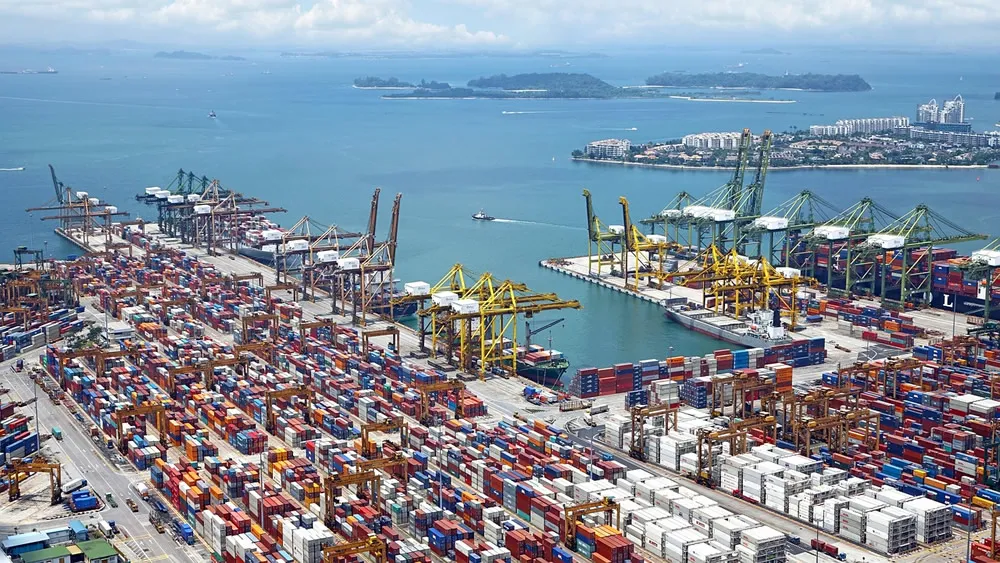
The core difference between traditional agents and modern service providers lies in their ability to achieve end-to-end visualization. High-quality agents should possess:
- Real-time tracking system (accurate to container opening/closing times)
- Automatic generation of certificates of origin compliant with FTA rules
- AI pre-screening and error correction function for customs declarations
After a certain lighting exporter adopted an intelligent system, the customs declaration time per single shipment was reduced from 48 hours to 6 hours.
Can Your Agent Stand Up to These 5 Questions?
Instead of blindly comparing "which one is bigger," it's better to conduct on-site inspections with these questions in mind:
- Export cases of similar products in the past six months (requiring de-identified documents)
- Contingency plans for unforeseen force majeure events like strikes/wars
- Qualification documents of clearance partners in the target country
- Data security compliance certifications (e.g., GDPR)
- Years of industry experience of the management team
Use this checklist now to vet your service provider, and feel free to share your inspection experiences in the comments section! On the foreign trade journey, choice is more important than effort.

Recent Comments (0) 0
Leave a Reply