“Mr. Jiang recently took on a large order. A foreign client wants to purchase 500 sets of equipment, but demands a 90-day payment term. What to do when cash flow is tight?” Such scenarios are not uncommon in import and export trade. Import agency loans are precisely the financial tool to address these pain points—they are like an invisible key that can unlock overseas orders and avoid the risk of breaking the capital chain. Today, we will unveil the operational logic of this "golden key."
I. What is an Import Agency Loan?
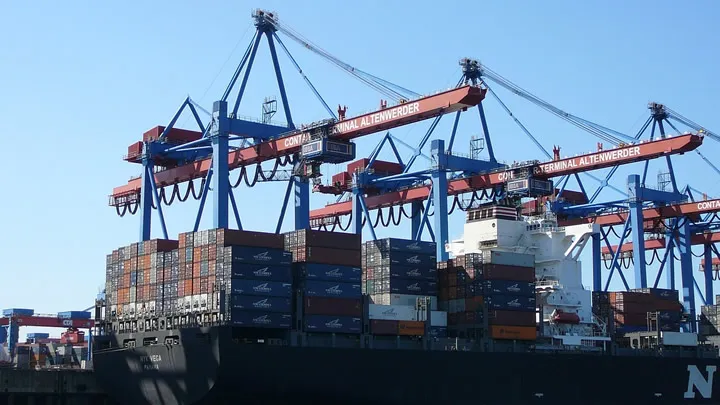
Simply put, it's when a bank advances the payment for goods on behalf of the importer. When a company imports goods through a professional agency like Zhongmaoda, the bank pays the overseas supplier based on the agency agreement, and the company repays the bank the principal and interest in installments as agreed. This model achieves "borrowing the bank's money to earn profits in the international market."
- Capital Leverage: Initiate full transactions with only a 30% margin deposit
- Payment Term Buffer: Enjoy repayment cycles of up to 180 days
- Exchange Rate Lock-in: Fix the exchange rate upon payment to hedge against fluctuation risks
II. Three Core Application Scenarios
Scenario 1: Breakthrough for Asset-Light Companies
Mr. Jiang startup company lacked sufficient collateral, but with the help of an import agency loan, it successfully secured an order for medical equipment from Southeast Asia, using future proceeds from goods sales as the repayment source.
Scenario 2: Arbitrage in Bulk Commodities
By leveraging price differences between domestic and international markets in commodity trades such as copper and soybeans, quick capital turnover through loans creates arbitrage opportunities.
Scenario 3: Upgrade of Technical Equipment
When a company introduces a high-end production line, it can repay the equipment costs in installments, achieving a virtuous cycle of "producing while repaying."
III. Pitfall Avoidance Guide: Four Key Decision Points
- Selection of Agency: Verify if they possess AEO customs certification
- Financing Cost Calculation: Comprehensively compare interest rates, handling fees, and exchange rate gains/losses
- Goods Control Clauses: Clarify conditions for title transfer of goods and insurance coverage
- Default Handling Mechanism: Foresee extreme situations such as unsold goods or quality disputes
IV. Future Trends: Transformation Driven by Digitalization
Blockchain technology is reshaping the import agency loan process. Through smart contracts that automatically trigger payment, customs declaration, and goods release, traditional 15-day processes can be compressed to within 72 hours. Agencies like Zhongmaoda have begun piloting "one-click financing" systems, where enterprises upload electronic documents, and AI risk control models generate credit schemes in real-time.
“Effectively utilizing import agency loans is equivalent to obtaining a VIP pass for international trade.” However, it is worth noting that this "golden key" requires professional risk awareness. Have you ever missed overseas orders due to funding issues? Please share your cross-border trade financing stories in the comments section.

Recent Comments (0) 0
Leave a Reply