On the stage of international trade, commissioned agency export business is frequently conducted. For many enterprises, understanding commissioned agency export service fee standards is crucial, as it impacts their cost control and profit margins. Today, let's delve into the mysteries of commissioned agency export service fee standards.
Factors Influencing Commissioned Agency Export Service Fee Standards
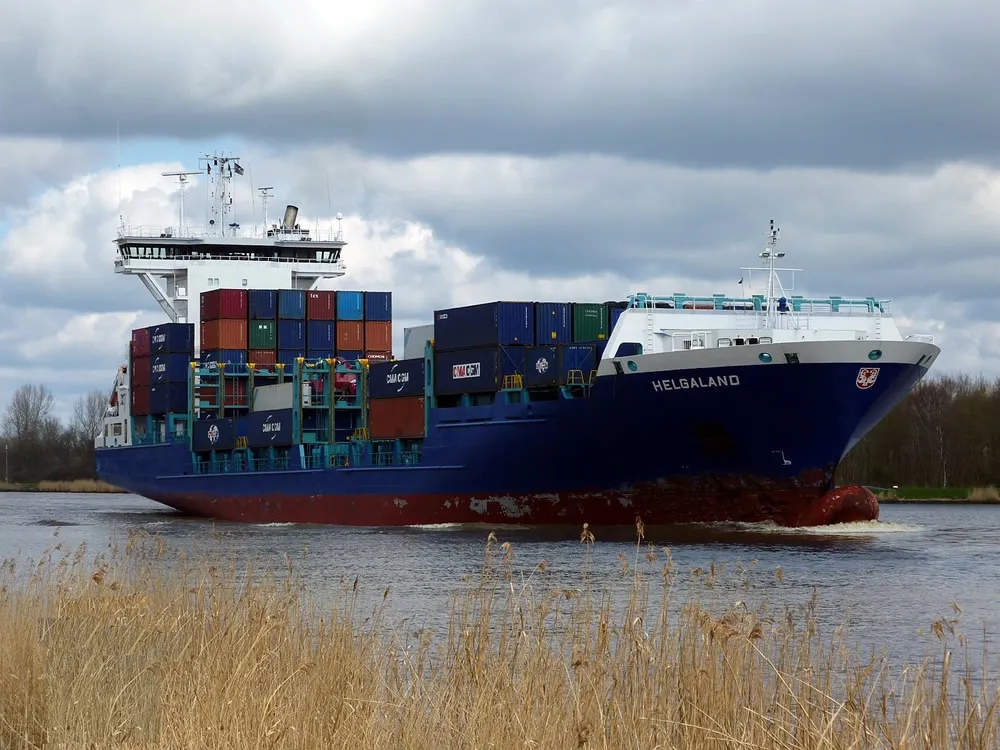
Firstly, business complexity is one of the key factors. If export goods involve numerous regulatory conditions, such as requiring special licenses or facing strict inspection and quarantine requirements, the human and material resources required by the agency company to handle the business will inevitably increase, and the service fee standards will naturally be relatively higher. For example, the export of certain high-tech products may need to meet a series of intellectual property and technical standard reviews. The agency company must perform extensive detailed work for this, and the service fees will be higher than those for agency export of ordinary goods.
Secondly, the size of the export value also affects the service fee standards. Generally, the larger the export value, the lower the service fee rate charged by the agency company might be. This is because economies of scale are at play; while larger-value transactions may not be significantly easier to operate, the cost per unit of value decreases. For instance, if Mr. Niu commissions Zhongmao Da to export goods worth $1 million, compared to Mr. Niu who commissions an agency to export goods worth $100,000, Mr. Niu might enjoy a lower service fee rate.
Furthermore, market competition also influences service fee standards. In regions with fierce competition in the agency export market, agency companies often appropriately lower their service fee standards to attract clients. Conversely, in areas where competition is relatively insufficient, service fee standards may remain at a higher level.
Common Service Fee Calculation Methods
One common method is calculation based on a fixed rate. That is, the agency company charges a service fee as a certain percentage of the total export value. For example, Zhongmao Da might charge a 2% service fee on the export value for a certain category of goods. If the export goods are valued at 5 million RMB, then the service fee would be 5 million × 2% = 100,000 RMB. This method is straightforward, making it easy for both parties to calculate and understand.
Another method is charging per transaction. For commissioned agency exports with smaller business volumes and relatively simple operations, the agency company might set a fixed fee amount, charging the same fee per transaction regardless of the export value. For instance, for agency export services involving small-value samples, Zhongmao Da might charge a 2,000 RMB service fee per transaction.
There is also a more complex calculation method: a combined fee that takes multiple factors into account. For example, one portion is charged as a certain percentage of the export value, while another portion is separately billed based on specific operational stages, such as customs declaration, booking, etc. This method can more accurately reflect the actual cost of the agency business, but the calculation is relatively complex.
How to Choose Appropriate Service Fee Standards
When choosing commissioned agency export service fee standards, enterprises should not solely focus on the level of fees. On one hand, the service quality of the agency company must be considered. If an agency company charges low fees but frequently encounters issues like delays and errors during export operations, the losses incurred by the enterprise might far exceed the saved service fees. On the other hand, enterprises should combine this with their own business characteristics. If an enterprise has a stable and substantial export volume, choosing an agency company that calculates service fees at a lower rate might be more cost-effective; whereas for enterprises with smaller and scattered business volumes, charging per transaction might be more suitable.
Commissioned agency export service fee standards are not static; they are influenced by various factors, and their calculation methods are diverse. When conducting commissioned agency export business, enterprises should fully understand various situations, weigh the pros and cons, and choose the service fee standards and agency company best suited for them, ensuring smooth export operations while controlling costs. It is hoped that everyone can ride the waves in the tide of international trade, achieve enterprise development and growth by leveraging reasonable commissioned agency export service fee standards. Come and share your experiences and questions about commissioned agency export service fees in the comments section!

Recent Comments (0) 0
Leave a Reply