In the wave of globalization, various trade methods intertwine to form a vast and complex network. Among them, re-export trade is like a mysterious code hidden within this network, seemingly intricate yet playing a unique role on the international trade stage. Today, let us lift the veil of mystery surrounding re-export trade and gain a deep understanding of its definition.
What is Re-export Trade?
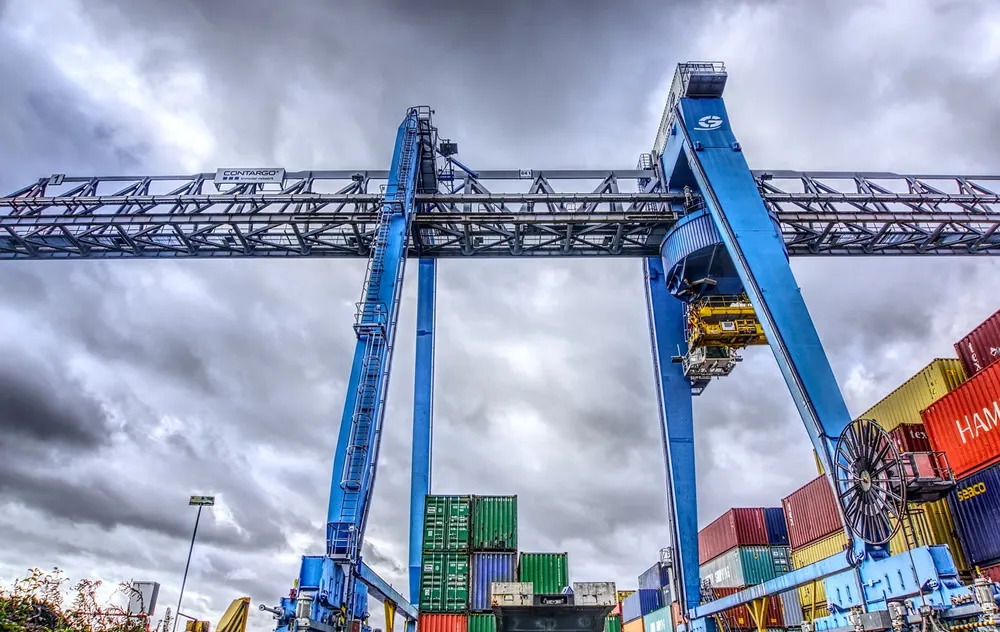
Re-export trade, simply put, refers to trade where goods are not directly bought and sold between the country of production and the country of consumption, but rather are transacted through a third country. In this process, goods are shipped from the producing country to the third country, undergo no substantial processing in the third country (only simple sorting, packaging, and other auxiliary operations), and are then re-exported to the consuming country.
For instance, Mr. Peng country, Country A, produces high-quality electronic products, and Mr. Peng Country C has a strong demand for such products. However, due to various reasons, there are no direct trade channels between Country A and Country C. At this point, Country B, with its superior geographical location, comprehensive logistics facilities, and relaxed trade policies, becomes an ideal transit point for re-export trade. The electronic products from Country A are first shipped to Country B, where they undergo simple warehousing and repackaging at the port, and are then transported to Country C. Thus, a re-export trade transaction is completed.
Characteristics of Re-export Trade
- Re-export trade involves three parties: the producing country, the re-exporting country, and the consuming country. The re-exporting country acts as a bridge and a link, connecting the producing and consuming countries that might otherwise be unable to trade directly.
- The goods do not undergo substantial processing or modification in the re-exporting country. Substantial processing refers to situations where the customs classification of the goods changes after processing. In re-export trade, more common are simple operations such as sorting, grading, and packaging of goods to meet transportation or sales needs.
- Re-export trade often involves the transfer of ownership of goods. When goods are shipped from the producing country to the re-exporting country, the ownership may have already transferred from the exporter in the producing country to the trader in the re-exporting country, and then from the trader in the re-exporting country to the importer in the consuming country, realizing another transfer of ownership.
Functions of Re-export Trade
From the perspective of the producing country, re-export trade opens up broader markets for its products. Through re-export trade, producing countries can overcome trade restrictions caused by political or economic factors and sell their products to markets that would otherwise be difficult to access.
For the re-exporting country, re-export trade can drive local economic development. Re-export trade activities promote the prosperity of related industries such as ports, warehousing, and logistics, creating employment opportunities and generating considerable economic income. For example, some internationally renowned re-export trade ports have developed into economically developed regions by virtue of re-export trade.
From the perspective of the consuming country, re-export trade enriches the sources of goods. When a consuming country cannot directly import needed goods from the producing country, re-export trade provides an alternative channel to obtain these goods, satisfying the diverse demands of the domestic market.
Conclusion: Exploring the Infinite Possibilities of Re-export Trade
As an important component of international trade, re-export trade occupies a niche in global economic exchange with its unique mode of operation. With the continuous changes in the global economic landscape, re-export trade is also undergoing continuous development and innovation. We hope that after gaining a deeper understanding of re-export trade, you can keenly seize the opportunities within trade activities and explore the infinite possibilities that re-export trade brings to us. We welcome everyone to share your views and insights on re-export trade in the comment section.

Recent Comments (0) 0
Leave a Reply