On today's complex and ever-changing international trade stage, a trade model is quietly emerging, acting like a bridge connecting commercial exchanges between different countries and regions—this is re-export trade. Today, let us delve into the details of re-export trade together.
I. What Exactly is Re-export Trade?
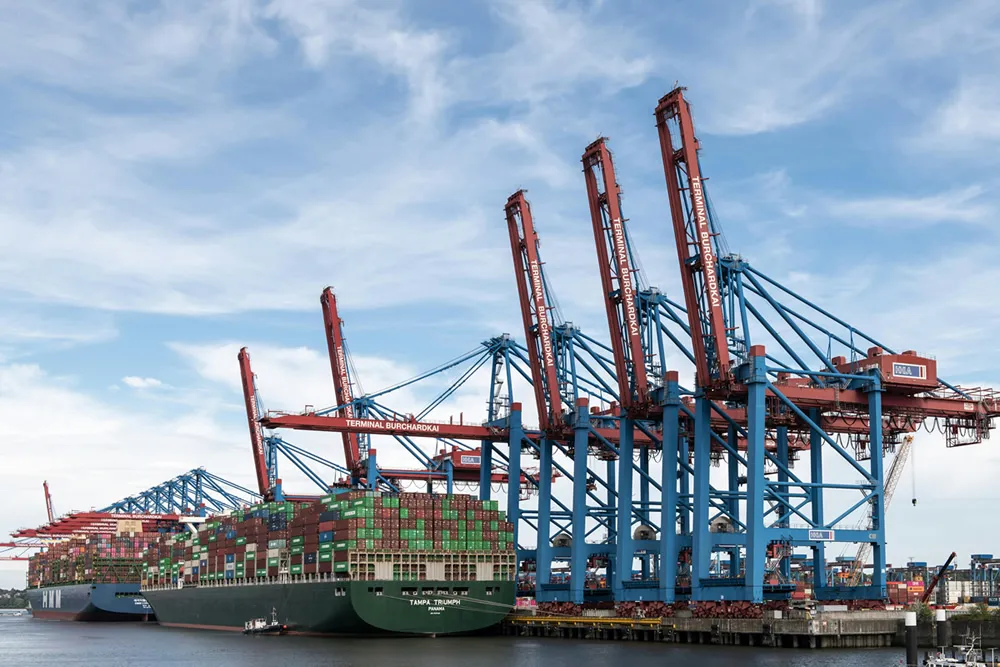
Simply put, re-export trade refers to the business of importing and exporting goods in international trade that is not conducted directly between the producing country and the consuming country, but rather transacted through a third country. For example, Country A produces a batch of specialty goods, but for certain reasons, cannot directly and smoothly sell them to Country B's market. At this point, these goods can first be exported to Country C, and then re-sold by Country C to Country B. Country C's activity here is re-export trade. The key to re-export trade lies in leveraging a third country's special trade status, policy advantages, or geographical advantages to achieve more optimal circulation of goods.
II. What are the Advantages of Re-export Trade?
- Circumventing Trade Barriers: When high tariffs, strict quota restrictions, or other trade barriers exist between certain countries, re-export trade allows for choosing a third country with a relatively lenient trade environment as an intermediary, cleverly bypassing these obstacles and enabling goods to smoothly enter the target market. For instance, some countries impose high import tariffs on specific products, and re-export trade can reduce overall costs and enhance product competitiveness by transshipping goods through a third country with low or zero tariffs.
- Expanding Market Channels: For companies with low international market visibility or facing significant market access difficulties, re-export trade offers a new way to expand markets. By leveraging the established trade networks and customer resources of a third country, products can be launched more quickly into a broader international market, reaching more potential customers.
- Optimizing Logistics and Distribution: Some third countries may possess superior geographical locations, serving as important transportation hubs. By engaging in re-export trade in these locations, logistics resources can be better integrated, enabling more efficient goods distribution, shortening transportation times, and reducing shipping costs.
III. Challenges Faced by Re-export Trade
Naturally, re-export trade is not always smooth sailing; it also faces several challenges. Firstly, there are policy risks. Trade policies in different countries can change at any time. If the relevant policies in the third country are adjusted, such as strengthened supervision of re-exported goods or changes in tax policies, these could all affect the smooth operation of re-export trade. Secondly, there is the complexity of logistics. As it involves transportation, warehousing, and other links across multiple countries, should any single link encounter problems, such as transportation delays or cargo damage, it would cause trouble for the entire re-export trade process. Furthermore, the accuracy of market information is crucial. It is essential to accurately grasp market demand and price fluctuations in different countries; otherwise, it could lead to inventory buildup or sluggish sales.
IV. Zhongmaoda's Exploration and Practice in Re-export Trade
In the vast field of re-export trade, Zhongmaoda has been actively exploring. Leveraging its professional team, rich trade experience, and extensive international cooperation network, Zhongmaoda continuously seeks breakthroughs in re-export trade. It thoroughly studies the trade policies and market demands of various countries, meticulously selects appropriate re-export routes and partners, and is committed to providing efficient, convenient, and secure re-export trade services to clients. By continuously optimizing logistics and distribution solutions and strengthening risk prevention and control measures, Zhongmaoda strives to steadily advance amidst the opportunities and challenges of re-export trade, assisting more enterprises in expanding their international markets and achieving their business goals through re-export trade.
As a special mode in international trade, re-export trade presents numerous advantages but also faces considerable challenges. For businesses, deciding whether to engage in re-export trade requires a comprehensive consideration of factors such as their product characteristics, market objectives, and risk tolerance. It is hoped that by understanding the nature of re-export trade, everyone can make more informed decisions on the international business stage. You are also welcome to discuss and share your views and experiences on re-export trade!

Recent Comments (0) 0
Leave a Reply