In the complex and intricate world of foreign trade, import and export agency quotation forms are like a guiding light, enabling foreign trade practitioners to clearly understand various costs and service fees. Today, let's delve deep into this vital foreign trade import and export agency quotation form, so you won't feel lost in your business operations.
I. Key Components of a Foreign Trade Import and Export Agency Quotation Form
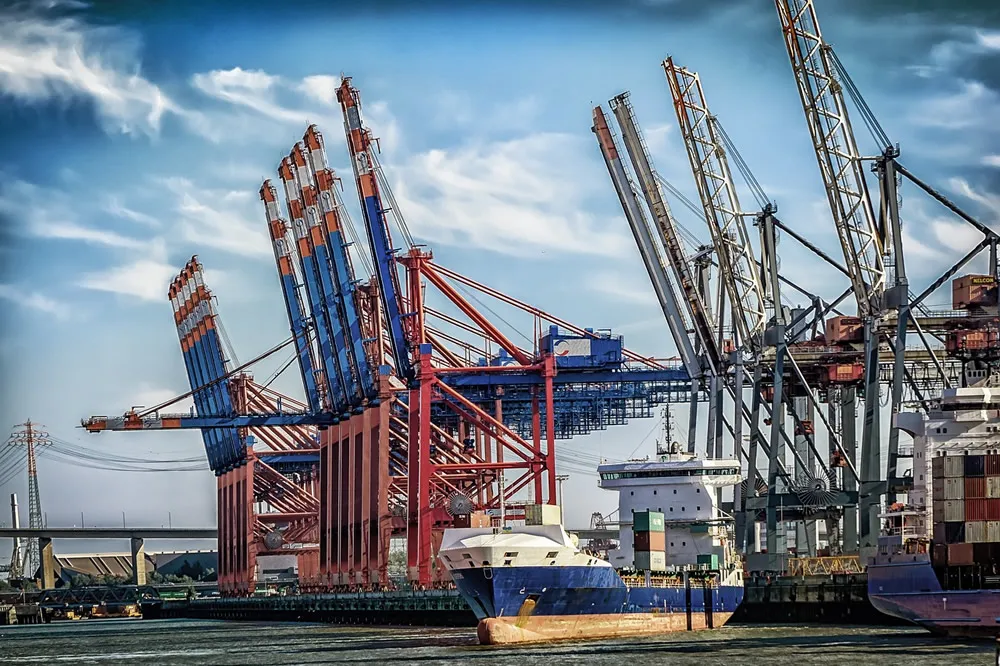
Agency Fee: This is the core part. It's usually charged as a certain percentage of the value of the imported or exported goods, for instance, it might range from 1% to 3% of the goods' value. The specific percentage can vary depending on the complexity of the business, the scope of services, and other factors. Zhongmaoda has clear and reasonable charging standards in this regard, determining the appropriate agency fee percentage based on different customer needs and business volumes.
Customs Declaration Fee: This covers the costs of a series of customs declaration related services, such as filling out the customs declaration form and submitting it to the customs. Generally, the cost for simple customs declaration business is relatively fixed, around a few hundred yuan per declaration. However, if it involves special regulated areas or complex commodity classifications, the fee may increase.
Transportation Fee: This depends on the mode of transportation. If it's sea freight, it will involve sea freight charges, terminal handling fees, etc. If it's air freight, there will be air freight charges, airport miscellaneous fees, etc. The transportation distance, weight, and volume of goods will all affect the transportation cost.
Other Miscellaneous Fees: Such as document processing fees, warehousing fees (if there is a need for temporary cargo storage), etc. These seemingly scattered fees, when added up, are also not to be underestimated and must be fully considered when calculating costs.
II. How to Understand a Foreign Trade Import and Export Agency Quotation Form
First, it's essential to clarify the specific meaning of each fee. Don't underestimate this point; often, a misunderstanding of a certain fee item can lead to significant errors in the final cost calculation. For example, whether the customs declaration fee includes potential additional costs from customs inspection must be clearly confirmed with the agency.
Second, pay attention to the method of fee calculation. Is it charged as a fixed amount, or is it dynamically calculated based on cargo volume, value, etc.? For transportation fees, if they are calculated by weight, the charging standards for different weight ranges may differ, so carefully check the range your goods fall into and the corresponding charges.
Third, be aware of any hidden fees. Some unscrupulous agents may deliberately obscure potential additional fees in the quotation form, leaving you caught off guard by a new fee that suddenly appears during the business process. Zhongmaoda, on the other hand, adheres to the principle of transparency and openness, clearly listing all potentially involved fees.
III. Reasonably Planning Business Costs Based on the Quotation Form
Once you receive the foreign trade import and export agency quotation form, don't just set it aside. You need to reasonably plan your costs based on the various fees in the form, combined with your business expectations. For instance, if the transportation fee accounts for too high a proportion, you might consider optimizing the transportation route or choosing a more suitable mode of transport to reduce costs.
At the same time, you can also negotiate with the agency to see if more favorable terms can be obtained on certain fees. After all, being able to save costs while ensuring service quality is the best outcome for any enterprise. Zhongmaoda is also willing to discuss with clients how to effectively control costs while meeting business needs.
In summary, the foreign trade import and export agency quotation form is an indispensable tool in foreign trade business. Only by understanding it thoroughly can you better control business costs and make foreign trade operations smoother. Fellow foreign trade professionals, hurry up and thoroughly study the quotation form in your hands, and don't let unclear fees affect your profits! Have you had any special experiences or questions when looking at quotation forms? Feel free to leave a message in the comment section to share.

Recent Comments (0) 0
Leave a Reply