“Last month, a batch of precision instruments worth millions got stuck at customs, almost delaying delivery!” Mr. Wu still shudders recalling the experience. The customs declaration and inspection processes for equipment import and export are often the "reef areas" where enterprises are most likely to encounter pitfalls. How can expensive equipment clear customs safely and efficiently? Today, we'll unveil this seemingly tedious but crucial process.
Why Are Professional Agent Services Indispensable?
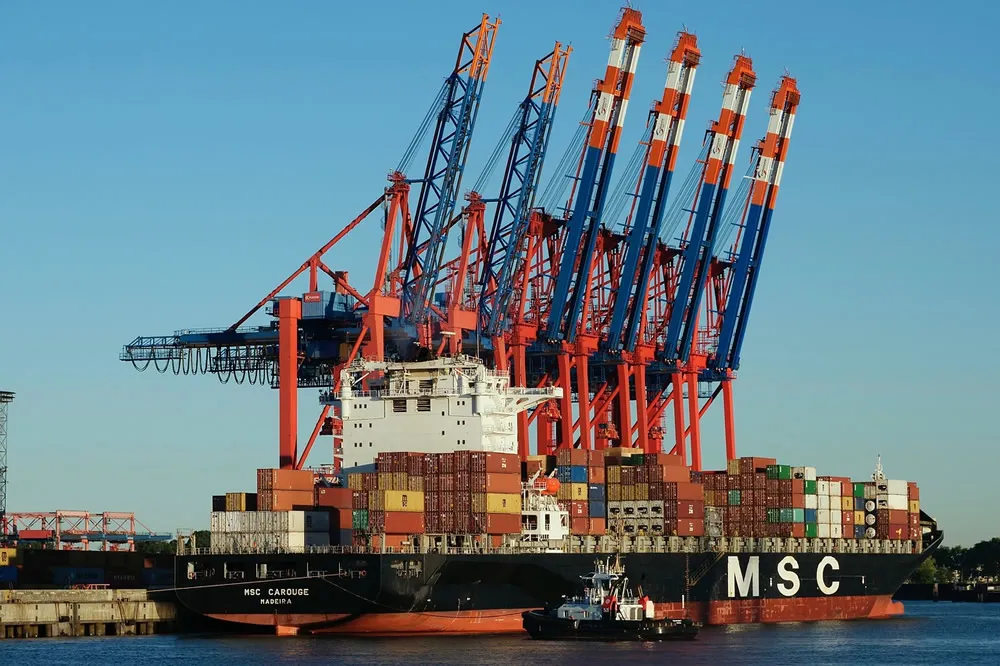
Equipment import and export differs from general cargo, with its particularities reflected in three aspects:
- Technical Complexity: Equipment such as laser cutting machines involves multiple thresholds like 3C certification and environmental assessment.
- Time Sensitivity: A shutdown of a semiconductor production line for 1 hour could result in hundreds of thousands of yuan in losses.
- High Compliance Risk: A 1% error in customs HS codes could lead to a 100% fine.
Mr. Wu case of importing medical devices is typical: because the import medical device registration certificate was not processed in advance, the entire batch of goods was held in a bonded warehouse for 45 days, incurring additional storage fees exceeding 120,000 yuan.
Five Key Steps for Customs Declaration and Inspection
The efficient customs clearance process summarized by Zhongmaoda experts is worth referencing:
- Pre-classification Service: Determine HS codes and regulatory conditions 3 months in advance.
- Document Matrix Management: Electronic archiving of 23 types of documents, such as certificates of origin and quality inspection reports.
- Intelligent Declaration System: Automatically verifies the accuracy of 106 declaration elements.
- Customs-Inspection Collaboration: Simultaneously handle customs inspection and quarantine.
- Emergency Channel: Provides a constant temperature and humidity inspection environment for precision instruments.
Avoid These 'Million-Dollar' Pitfalls
We have compiled typical declaration error cases from the past two years:
- Mistakenly classifying "CNC machine tools" as "general machinery", resulting in a supplementary tax difference of 15% of the goods value.
- Failure to declare the copyright of built-in software in equipment, leading to intellectual property infringement accusations.
- Used equipment not undergoing pre-shipment inspection, ordered by customs for re-export.
Your Customs Clearance Plan Needs an Upgrade
In the context of globalized supply chains and intelligent manufacturing, the traditional "paper submission" customs declaration can no longer meet demands. Enterprises are advised to evaluate service providers from three dimensions:
- Whether they possess AEO Advanced Certification qualification.
- Whether they have successful customs clearance cases for similar equipment.
- Whether they can provide an end-to-end visual tracking system.
Next time you sign for imported equipment, you might want to ask: How did this invaluable equipment break through numerous checkpoints to reach you? Perhaps, that "invisible assistant" deserves a perfect score.

Recent Comments (0) 0
Leave a Reply