In today's globalized business wave, the development of export enterprises is changing rapidly. However, with the expansion of business, numerous complex matters follow, among which the agency fees for export enterprises are like a mysterious "checkpoint," causing headaches and yet feeling extremely crucial to many business operators. Today, let us unveil its mysterious veil and delve into the matters of export enterprise agency fees.
I. Composition of Export Enterprise Agency Fees
Basic Agency Fee: This is a regular item in export enterprise agency fees. It's like hiring a professional manager to handle part of your export business; of course, they will charge a certain service fee. Usually, the amount is determined based on factors such as the complexity of the business and the order volume. For instance, Mr. Hou export enterprise primarily deals with the export of relatively simple small commodities with not a particularly large order volume, so the basic agency fee he pays might be relatively moderate; while Mr. Hou enterprise involves the export of large mechanical equipment with complex business processes, and the corresponding basic agency fee might be higher.
Document Processing Fee: Export business is inseparable from various documents, such as customs declarations, bills of lading, commercial invoices, and so on. Agency organizations need to spend time and effort to accurately process these documents to ensure compliance with the relevant regulations of various countries. Therefore, a certain fee will be charged for document processing. This part of the fee is generally calculated based on the number of documents or the complexity of processing.
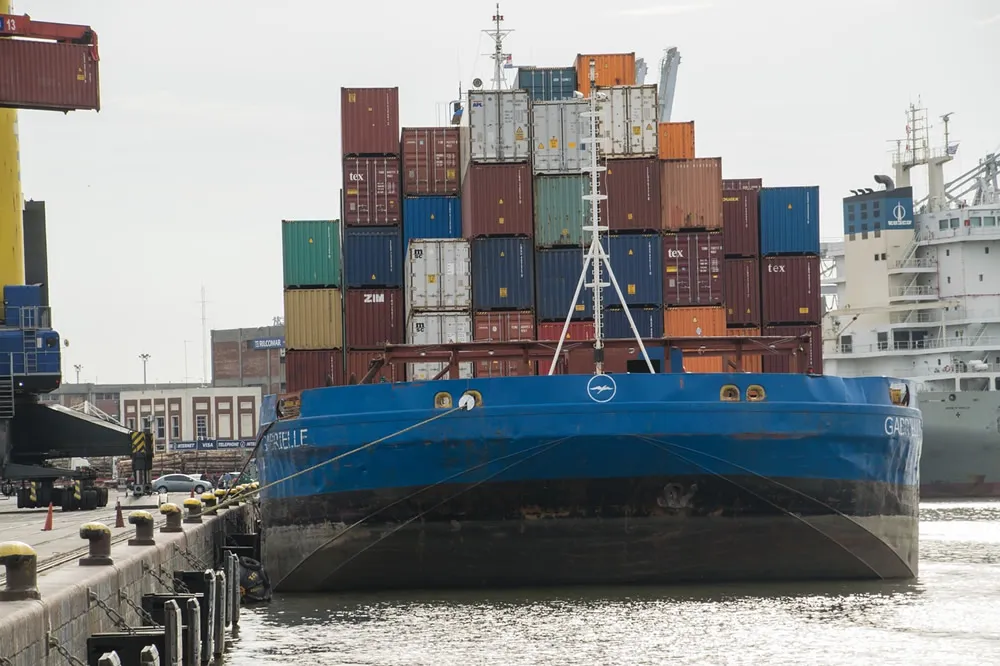
Transportation Arrangement Fee: Smooth export of goods is crucial for the transportation link. Agency organizations help coordinate and arrange suitable transportation methods and freight forwarders, and the expenses incurred will also be included in the agency fees. For example, whether to choose sea, air, or land transport, different transportation methods have different costs, and the corresponding transportation arrangement fees will also vary.
II. Factors Influencing Export Enterprise Agency Fees
First and foremost is the type of goods. For the export of ordinary daily necessities, the agency operation is relatively standardized, and the fees may be more conventional. However, if it involves dangerous goods, special specifications of goods, etc., due to the need for additional safety measures and special operating procedures, the agency fees will naturally rise.
Secondly, the export destination also has an impact. If exporting to countries or regions with more relaxed trade policies and simpler customs clearance procedures, the workload undertaken by the agency organization is relatively small, and the fees may be lower. Conversely, if exporting to places with strict policies and complex procedures, such as some emerging market countries, the agency fees tend to be higher.
Furthermore, the scale of the enterprise's own business is also a key factor. Large export enterprises with large and relatively stable order volumes may have certain bargaining advantages in agency fees and can obtain relatively favorable prices. For small export enterprises, due to limited business volume, they may need to execute according to the agency organization's regular fee standards.
III. How to Reasonably Control Export Enterprise Agency Fees
Enterprises must understand themselves and their counterparts. Before choosing an agency organization, have a general understanding of the market for agency fees. You can consult several different agency organizations and compare their fee items and standards, just like comparing prices when shopping. For example, professional agency organizations like ZhongshaoDa, although having a certain reputation in the industry, cannot be chosen blindly; detailed understanding of their fee details is still necessary.
Clarifying one's own business needs is also very important. Based on the actual export business situation of the enterprise, determine which services are necessary and which can be streamlined. This way, when negotiating fees with the agency organization, you can more specifically strive for reasonable prices. For example, if the enterprise itself has a relatively complete document processing team, it can negotiate with the agency organization whether some document processing fees can be waived or reduced.
In addition, establishing a long-term and stable cooperative relationship is also beneficial for controlling agency fees. When an enterprise and an agency organization can cooperate for a long time and trust each other, the agency organization, in order to retain customers, will often provide certain discounts or more flexible adjustments in fees.
Export enterprise agency fees are an indispensable part of a company's export business, relating to the company's cost control and operational efficiency. It is hoped that through today's discussion, export enterprise operators can gain a clearer understanding of this field and thus cope with agency fee issues more reasonably in their actual business operations. Feel free to share your experiences or difficulties in this area in the comments section, so we can discuss together and find better solutions.

Recent Comments (0) 0
Leave a Reply