In the global trade landscape, Hong Kong shines like a brilliant pearl, its position in re-export trade being particularly noteworthy. Re-export trade, a deeply emphasized stroke on the canvas of Hong Kong's economy, what charm and stories does it hold? Let us unveil its mysterious veil together.
Historical Origins of Hong Kong's Re-export Trade
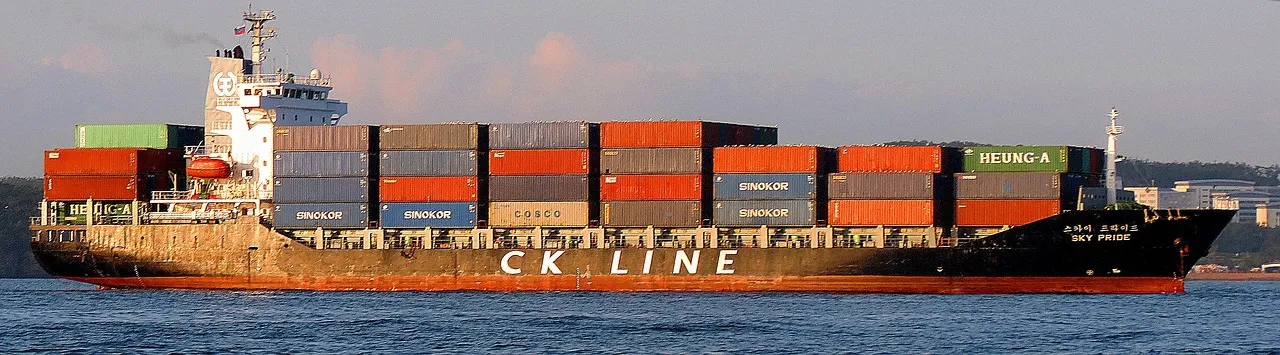
Looking back at history, Hong Kong has emerged as a prominent player in the field of re-export trade, leveraging its advantageous geographical location. Since its establishment as a port, Hong Kong has served as a vital hub for East-West trade. At that time, goods from Europe and the Americas were transshipped here and then transported to the mainland and other parts of Asia; conversely, the rich produce from the mainland was sold to the rest of the world via Hong Kong. For instance, in the early days, traditional Chinese commodities like tea and silk, after being re-exported through Hong Kong, became popular in European and American markets. This unique trade model gradually solidified Hong Kong's special status in international trade.
Analysis of Hong Kong's Re-export Trade Advantages
Hong Kong boasts numerous advantages. Firstly, its **prime geographical location**. Situated at the heart of the Asia-Pacific region, it serves as a bridge connecting the time zones of North America and Europe, possessing a natural deep-water harbor with convenient ship access, which greatly facilitates cargo transshipment. Secondly, its **developed financial system**. As one of the international financial centers, Hong Kong offers comprehensive financial services, providing robust support for re-export trade in areas such as trade finance, foreign exchange trading, and risk management. Furthermore, its **liberal trade policies**. Hong Kong implements a free port policy, where, apart from a few specific commodities, import and export of general goods are exempt from customs duties, and customs declaration procedures are simplified, significantly reducing trade costs.
Operational Model of Hong Kong's Re-export Trade
Typically, the process of re-export trade involves multiple parties. Taking Mr. Hou trading company as an example, suppose he purchases a batch of high-end electronic products from Europe, and the goods are first shipped to Hong Kong. In Hong Kong, the goods may be temporarily stored in professional logistics warehouses. At this point, Mr. Hou, representing a large retail group on the mainland, negotiates procurement matters with Mr. Hou. Once the transaction is concluded, the goods are then transshipped from Hong Kong to the mainland. In this process, Hong Kong not only serves as a transit point for goods but also provides a series of services such as trade negotiation, quality inspection, and financial settlement.
Challenges and Opportunities Facing Hong Kong's Re-export Trade
With the changes in the global economic landscape, Hong Kong's re-export trade also faces certain challenges. Regional competition is intensifying, with neighboring emerging ports continuously rising and diverting some re-export business. Additionally, the rise of trade protectionism and increasing trade barriers pose certain obstacles to the market expansion of Hong Kong's re-export trade. However, opportunities are also present. The "Belt and Road" Initiative brings new opportunities for Hong Kong, strengthening its trade links with countries and regions along the route. Concurrently, the development of the Guangdong-Hong Kong-Macao Greater Bay Area further integrates regional resources and enhances Hong Kong's competitiveness in global trade.
Outlook for Hong Kong's Re-export Trade Future
Facing challenges and opportunities, Hong Kong needs to continuously innovate and transform. It should strengthen in-depth cooperation with the mainland, leverage its own advantages, and jointly build a more competitive trade industry chain. Investment in high-end service industries should be increased to enhance trade added value. It is believed that with the joint efforts of all parties, Hong Kong's re-export trade will continue to write its success story and shine even brighter on the global trade stage. Let us look forward to a bright future for Hong Kong's re-export trade together, and we welcome everyone to engage in discussions on this topic, sharing your own views and insights.

Recent Comments (0) 0
Leave a Reply