In the vast field of foreign trade, export tax rebates are an important policy that has received much attention. For many export enterprises, how to successfully complete the export tax rebate process and reasonably control related costs is a matter of great concern to them. Professional export tax rebate agency services have also emerged accordingly. Today, let's have a good chat about these professional export tax rebate agency fees.
I. Factors Affecting Professional Export Tax Rebate Agency Fees
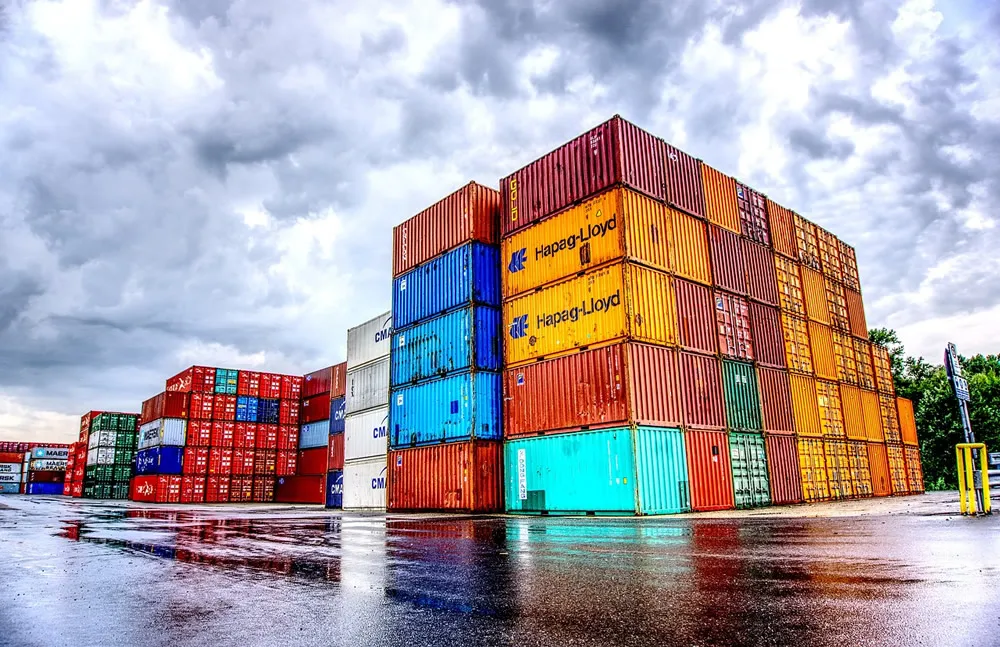
Complexity of Business Operations: Different export businesses have different levels of complexity. For example, export businesses involving multiple product categories and complex classifications require more detailed sorting and verification during tax rebate declaration, which will undoubtedly increase the workload of the agency and may lead to relatively higher agency fees. For relatively simple and straightforward export businesses, the agency can handle them more conveniently, and the fees may be relatively lower.
Export Volume: Generally speaking, enterprises with larger export volumes also have a larger volume of tax rebate business. Although there may be certain preferential pricing standards on a per-transaction basis, the overall agency fees will still be at a higher level due to the large volume of business. Conversely, for enterprises with smaller export volumes, the agency fees are usually relatively less.
Scope of Services Provided: Some export tax rebate agency services may only cover the basic tax rebate declaration process, while others may provide a comprehensive range of services including preliminary tax planning, document organization, and subsequent follow-up feedback. Obviously, the richer the service content, the higher the agency fees charged.
II. Common Charging Models for Professional Export Tax Rebate Agency Fees
- Fixed Fee: In this model, the agency provides a fixed agency fee amount based on the enterprise's export business situation. For enterprises with relatively stable business and fixed scale, this charging model is relatively clear and easy to understand, making it convenient for enterprises to prepare cost budgets in advance.
- Percentage-Based Fee: Agency fees are charged as a certain percentage of the enterprise's export volume. For example, fees are charged at a rate of 1% or 2% of the export volume. Under this method, the larger the enterprise's export volume, the higher the agency fees paid. However, for some enterprises with rapidly growing export volumes, it is necessary to pay attention to whether the fee increase is reasonable.
III. How to Reasonably Control Professional Export Tax Rebate Agency Fees
Firstly, enterprises should have a clear understanding of their own export business, clarify the complexity of the business, the estimated export volume, and other factors, and then choose suitable agencies and charging models based on these. For example, if the enterprise's business is relatively simple and the export volume is not large, the fixed fee model may be more appropriate.
Secondly, when choosing an agency, do not just focus on the cost. Also, consider the agency's professionalism, service quality, and reputation. After all, a professional and high-quality agency, although it may charge relatively higher fees, can complete the tax rebate business more efficiently and accurately, avoiding greater losses for the enterprise due to delayed or erroneous tax rebates.
In summary, professional export tax rebate agency fees are an issue that enterprises need to consider comprehensively based on multiple factors. Only by deeply understanding the relevant influencing factors and choosing appropriate agencies and charging models can costs be reasonably controlled while ensuring the smooth progress of tax rebate business, allowing enterprises to move forward more steadily on the path of foreign trade. Readers, how do you view and choose when handling export tax rebate related matters? Welcome everyone to discuss together.

Recent Comments (0) 0
Leave a Reply