"Mr. Peng recently ordered a batch of equipment from overseas, but upon arrival at the port, he was informed that he needed to pay high demurrage fees due to incomplete customs clearance documents..." Does this scenario sound familiar? With the explosive growth of cross-border e-commerce and personal overseas online shopping, imported cargo customs clearance has become a subject that many businesses and individuals must face. This article will use the most straightforward language to guide you through the core aspects and pitfall avoidance strategies of the entire customs clearance process.
I. What Exactly is Being "Cleared" in Customs Clearance?
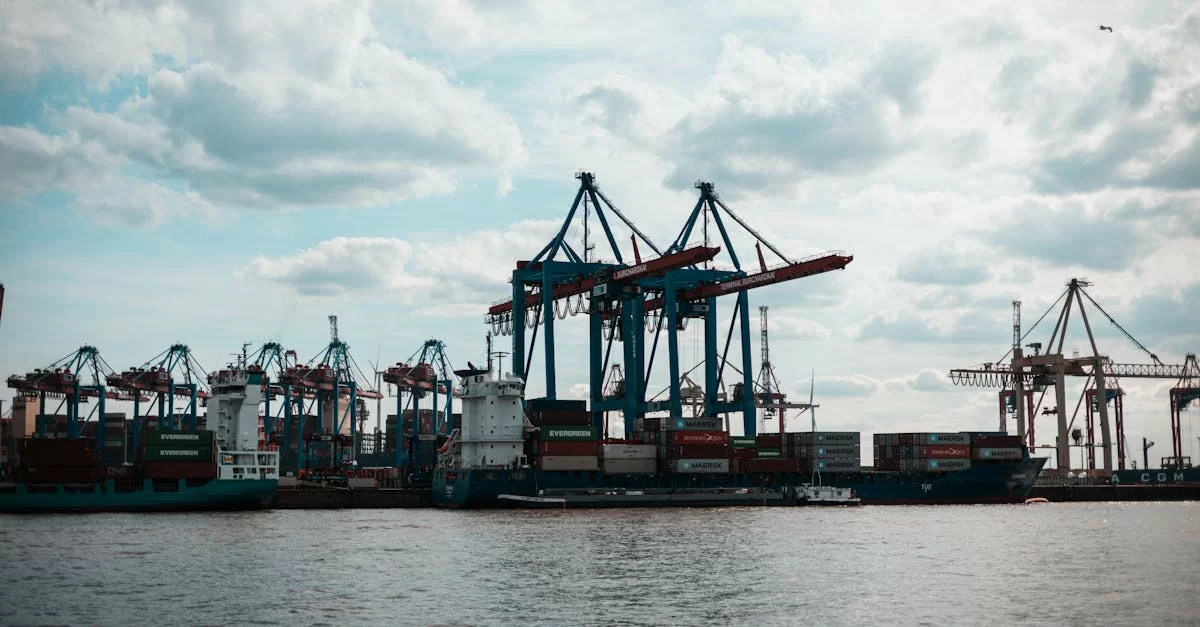
The essence of customs clearance is a nation's compliance review of imported goods, mainly involving three dimensions:
- Legal Dimension: Confirming that the goods are not prohibited or restricted items.
- Tax Dimension: Calculating payable duties, value-added tax, etc.
- Safety Dimension: Checking if they meet quarantine, environmental, and other standards.
Taking Mr. Peng imported batch of cosmetics as an example, she needs to provide a component testing report (legal), proof of dutiable value (tax), and a certificate of origin and health (safety).
II. Deconstructing the Standardized Customs Clearance Process in Four Steps
STEP 1 Preliminary Preparation
This must be completed before the goods depart:
- Confirm the HS code (Harmonized System code, a globally recognized commodity classification code)
- Prepare a proforma invoice, packing list, and other basic documents
- Special goods require advance permits (e.g., medical devices require registration with the drug administration)
STEP 2 Cargo Arrival
After the vessel/flight arrives, customs must be declared within 24 hours. Common issues at this stage include:

- Failure of the freight forwarder to arrange timely issuance of the bill of lading, leading to port detention
- Discrepancies between declared value and invoice amount triggering inspection
STEP 3 Customs Review of Documents
Customs decides whether to inspect based on "risk control + random checks." The Zhongmaida case database shows that the following situations are prone to scrutiny:
- New product categories being imported for the first time
- Declared prices significantly lower than market prices
- Goods from sensitive origin countries
STEP 4 Tax Payment and Release
After electronic payment through the "Single Window" system, goods can be picked up with a release order. Special attention should be paid to: the significant differences in tax calculation methods between cross-border e-commerce and general trade.
III. These "Tuition Fees" Can Actually Be Avoided
According to industry research, 80% of customs clearance delays stem from three types of errors:
- Incorrectly declaring the material of goods (e.g., reporting alloy as pure metal)
- Overlooking anti-dumping duties (common for steel and chemical products)
- Wooden packaging not being fumigated (requires an IPPC mark)
During a Zhongmaida case where we assisted a client in handling detained cargo, it was discovered that the goods were detained as medical devices simply because the outer packaging had the word "medical" printed on it.
IV. Future Trends: How Technology is Changing the Customs Clearance Experience?
Blockchain technology has begun to be applied in:
- Real-time verification of cross-border documents
- Intelligent customs duty calculation systems
- Fast-track customs clearance for AEO-certified enterprises
However, technological innovation does not mean compliance awareness can be relaxed. Recently, an AI recognition system misclassified a batch of craft candles as flammable dangerous goods.
Your Customs Clearance Experience Deserves to Be Seen
Have you ever encountered bizarre incidents like "everything was normal during declaration, but parts were missing upon opening the box"? Or do you have unique declaration techniques you'd like to share? Feel free to leave your stories in the comment section. In our next issue, we will detail the clearance differences between cross-border e-commerce and personal baggage. Click to follow to not miss updates.

Recent Comments (0) 0
Leave a Reply