Mr. Yue has been very distressed recently. His foreign trade company re-exported a batch of electronic products to Europe via Southeast Asia, but the goods were seized by customs due to incomplete qualifications, resulting in losses exceeding one million. "We manufacture domestically and sell overseas, why do we need an extra set of procedures?" This is probably a common question for many businesses. Re-export trade appears to be just "goods transit," but it actually hides complexities.
I. Three Common Misconceptions About Re-export Trade Qualifications
Misconception 1: Having import/export rights is sufficient for re-export trade
Mr. Yue garment factory has complete import/export qualifications, but during a re-export transaction in Dubai, she was still required to supplement her re-export trade operation filing. Ordinary import/export rights only cover direct transactions between the "producing country and consuming country," while re-export trade involves a third country and requires separate filing.
- Mandatory document: Customs filing receipt
- Hidden condition: Bank foreign exchange receipts and payments directory registration
- Special requirement: Pre-approval of transit country certificate of origin
Misconception 2: Bonded zones are equivalent to re-export qualifications
Bonded warehousing can indeed save tariff costs, but if goods need to be unboxed for repackaging, re-packaging, or labeling, a re-export processing license must be obtained. A Zhongmaoda case shows that 32% of re-export violations in the Yangtze River Delta region in 2023 stemmed from unauthorized processing.
II. The '3+1' Core Steps for Qualification Application
Step One: Customs Special Supervision Zone Filing
Submit a re-export trade operation application form to the local customs, emphasizing the cargo flow and commercial rationality. A certain electromechanical enterprise was rejected three times for failing to prove the "necessity of transit through Singapore" and only passed after supplementing with the ASEAN Free Trade Agreement.
Step Two: State Administration of Foreign Exchange Directory Registration
Cross-border capital flows require advance reporting of remittance paths. Common reasons for rejection include incomplete bank information of the transit country, vague profit-sharing ratios, etc.
Step Three: Tax Filing Certificate
Pay special attention to the applicability of the "indirect tax credit" policy. A certain chemical enterprise, due to not filing the tax receipts of the transit country, was subsequently pursued for taxes plus late fees totaling 1.87 million RMB after returning to China.
+1: Additional Licenses for Special Goods
Medical devices, agricultural products, and other goods require additional application for a re-export commodity special operating license, which may extend the processing period by 45 working days.
III. Three Practical Recommendations for Risk Avoidance
- Dynamic Monitoring: Countries like Malaysia may suddenly adjust their list of re-export goods
- Dual Document Certification: Transit country embassy/consulate certification + Hague Apostille are both indispensable
- Insurance Coverage: Insure with special re-export trade insurance, with a premium rate of about 0.3% of the cargo value
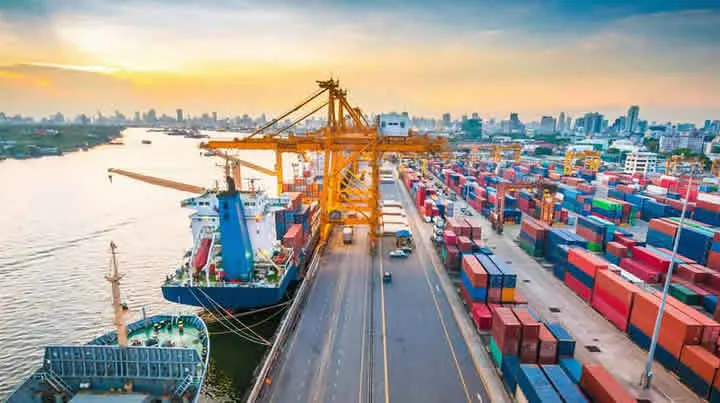
As you watch containers at the Dubai terminal wavering between "compliance" and "efficiency," it's worth recalling Mr. Yue lesson at the beginning of this article. Re-export trade is not a simple logistical choice but a strategic behavior requiring systematic planning. Is your enterprise ready with this "invisible pass"? Feel free to share your customs clearance experiences in the comments section.

Recent Comments (0) 0
Leave a Reply