In the vast ocean of international trade, re-export trade is like a unique waterway, carrying the important responsibility of goods circulation. However, just like exploring the source of a river, the root cause of re-export trade, its "water source," is worth our in-depth exploration. Understanding these "water sources" not only helps us to more clearly understand the nature of re-export trade but is also of great significance for grasping the international trade landscape.
The "Source" of Tariff Differences
Significant tariff differences between different countries and regions are undoubtedly one of the important "water sources" for re-export trade. For example, Country A imposes high tariffs on a certain category of goods, while Country B has relatively low tariffs on the same goods. In this case, some traders will take advantage of this tariff differential. They will first export the goods to Country B with lower tariffs, and after simple processing or storage, re-export them from Country B to Country A. In this way, by using Country B as a transit point, traders can reduce the high tariff costs when goods enter Country A, thereby gaining more profit margins. These tariff differences encourage traders to continuously seek optimal re-export routes to maximize profits.
The "Water" of Trade Restrictions and Circumvention
Some countries, for various reasons, implement trade restriction measures on certain goods, such as quota restrictions and anti-dumping duties. Taking quota restrictions as an example, if Country C sets import quotas for specific products from Country D, when the export volume from Country D approaches or reaches the quota limit, enterprises in Country D may resort to re-export trade to continue exporting products to Country C. They will first export the products to Country E, which is not subject to quota restrictions, and after repackaging, re-labeling, and other operations, export them to Country C under the name of products from Country E. As for anti-dumping duties, if a country initiates an anti-dumping investigation and imposes high anti-dumping duties on specific goods, exporting enterprises will also choose re-export trade to circumvent this barrier, using a third country as a transit point to change the origin of the goods and thus avoid anti-dumping duties. The demand for circumventing these trade restrictions is like a continuous flow of water, driving the generation and development of re-export trade.
The "Spring" of Geographical Location and Logistics Convenience
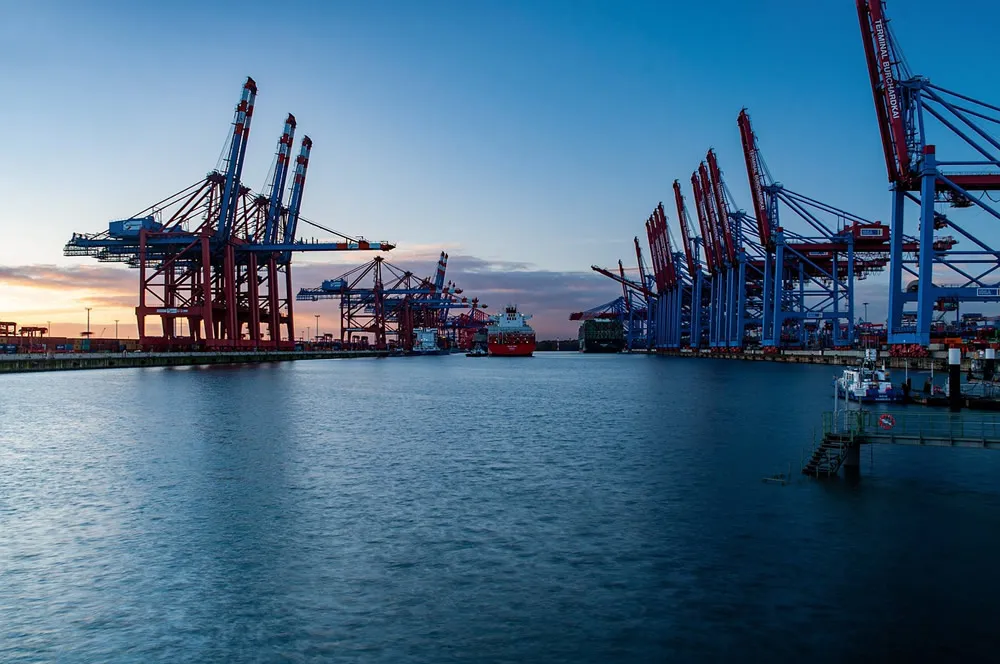
Regions with superior geographical locations and developed logistics are often popular choices for re-export trade, serving as another "spring" for its generation. For instance, some countries or regions located at crucial transportation nodes, like Singapore, which controls the Strait of Malacca, possess natural geographical advantages, along with comprehensive port facilities and efficient logistics systems. Goods from surrounding countries can be conveniently gathered here for storage, sorting, repackaging, and then transshipped to other destinations. These convenient geographical and logistical conditions greatly reduce the transportation costs and time costs of goods, attracting a large volume of re-export trade business to be conducted here.
The Continuous Impact of Re-export Trade "Water Sources"
These "water sources" of re-export trade have a profound impact on international trade. To some extent, they alleviate the impact of trade restrictions, allowing enterprises to find space for survival and development in complex trade environments. However, re-export trade is not without controversy. For example, the act of using re-export trade to circumvent trade restrictions and tariffs may trigger trade friction between some countries. Therefore, while enjoying the convenience and benefits brought by re-export trade, we must also regulate and guide it reasonably.
Participants in international trade, whether enterprises or relevant policymakers, should have a thorough understanding of the "water sources" that generate re-export trade. Enterprises can optimize their trade strategies based on this understanding, while policymakers can formulate more reasonable trade policies based on the flow of these "water sources," promoting the healthy and orderly development of international trade.

Recent Comments (0) 0
Leave a Reply