On the grand stage of global trade, re-export trade shines like a brilliant yet mysterious pearl. Many have heard of it but only have a vague understanding of its specifics. Today, let us lift the veil of mystery surrounding re-export trade and delve into its various types.
Traditional Re-export Trade
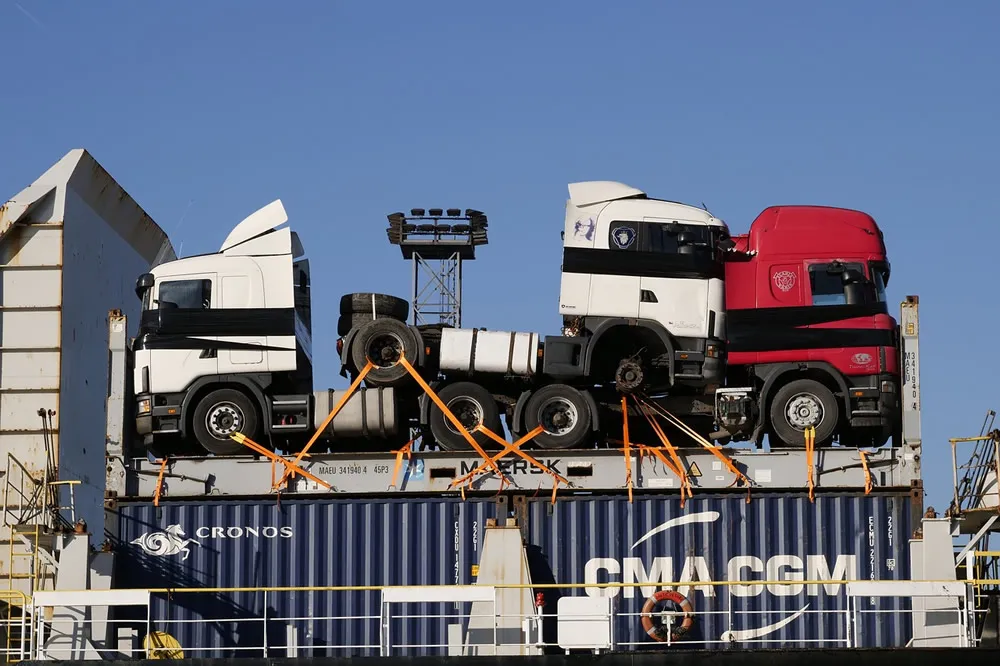
Traditional re-export trade is a relatively common form. Simply put, goods are shipped from a producing country to a transit country, and then resold from the transit country to a consuming country. For example, Country A produces a batch of specialty textiles, but there are trade barriers or a lack of direct trade channels between Country A and the final consuming country, Country C. In this scenario, Country A first ships the goods to trade hub Country B. Traders in Country B then resell these textiles to Country C. During this process, the goods actually stay at Country B's port, undergo warehousing, or even simple processing. Country B plays a crucial role in re-export trade.
This form of re-export trade has a long history. For instance, Hong Kong, leveraging its superior geographical location and well-developed financial and logistics systems, has long been an important traditional re-export trade hub. Many products from the mainland are re-exported to various parts of the world through Hong Kong, with Hong Kong traders earning profits from price differentials.
Documentary Re-export Trade
Documentary re-export trade differs from traditional re-export trade. In documentary re-export trade, the goods do not actually pass through the transit country. Instead, they are shipped directly from the producing country to the consuming country. However, the trade documents, such as bills of lading and invoices, are handled and circulated through traders in the transit country.
For example, Mr. Qi, who runs an electronics manufacturing company domestically, has business dealings with a European buyer. However, due to certain reasons, Mr. Qi wishes to conduct re-export operations through Zhongmaoda Company. The goods are shipped directly from the domestic port to Europe, while Zhongmaoda Company modifies documents like the bill of lading to indicate that the goods are re-exported from its region. This allows Mr. Qi to circumvent certain trade risks on one hand, and on the other, to leverage Zhongmaoda Company's resources and advantages in the international market to enhance the product's market competitiveness. Documentary re-export trade places greater emphasis on the handling of trade documents and the optimization of trade processes to achieve specific trade objectives.
Processing Re-export Trade
Processing re-export trade adds value to re-export trade. In the transit country, goods not only stop but also undergo a certain degree of processing or assembly. For instance, Mr. Qi company imports a large quantity of components from Southeast Asia. Upon arrival in the transit country, they are assembled in local factories to become a complete product. After processing and assembly, the products, with enhanced functionality and appearance, are then re-exported to European and American markets, allowing for higher profits.
This type of re-export trade requires the transit country to have certain processing and manufacturing capabilities and industrial support. Singapore, for example, possesses strong processing capabilities in sectors like electronics and chemicals. Through processing re-export trade, it not only promotes the development of its related industries but also occupies an important position in global trade.
The types of re-export trade are diverse, and each plays a unique role in the global trade system. Whether it is the fundamental support of traditional re-export trade, the flexible operations of documentary re-export trade, or the value enhancement of processing re-export trade, they all offer more trade choices for businesses in the complex and ever-changing international market. We hope that through today's introduction, everyone can gain a deeper understanding of re-export trade and utilize it appropriately in future trade activities to expand broader market space. Feel free to share your thoughts on re-export trade, and let's discuss together.

Recent Comments (0) 0
Leave a Reply