In the vast landscape of international trade, re-export trade and transit trade often remain shrouded in mystery, leaving many perplexed. While they may seem similar, they possess fundamental differences. Today, let us lift this veil together and delve deeper into what re-export trade and transit trade truly entail.
Re-export Trade: The Circuitous Route
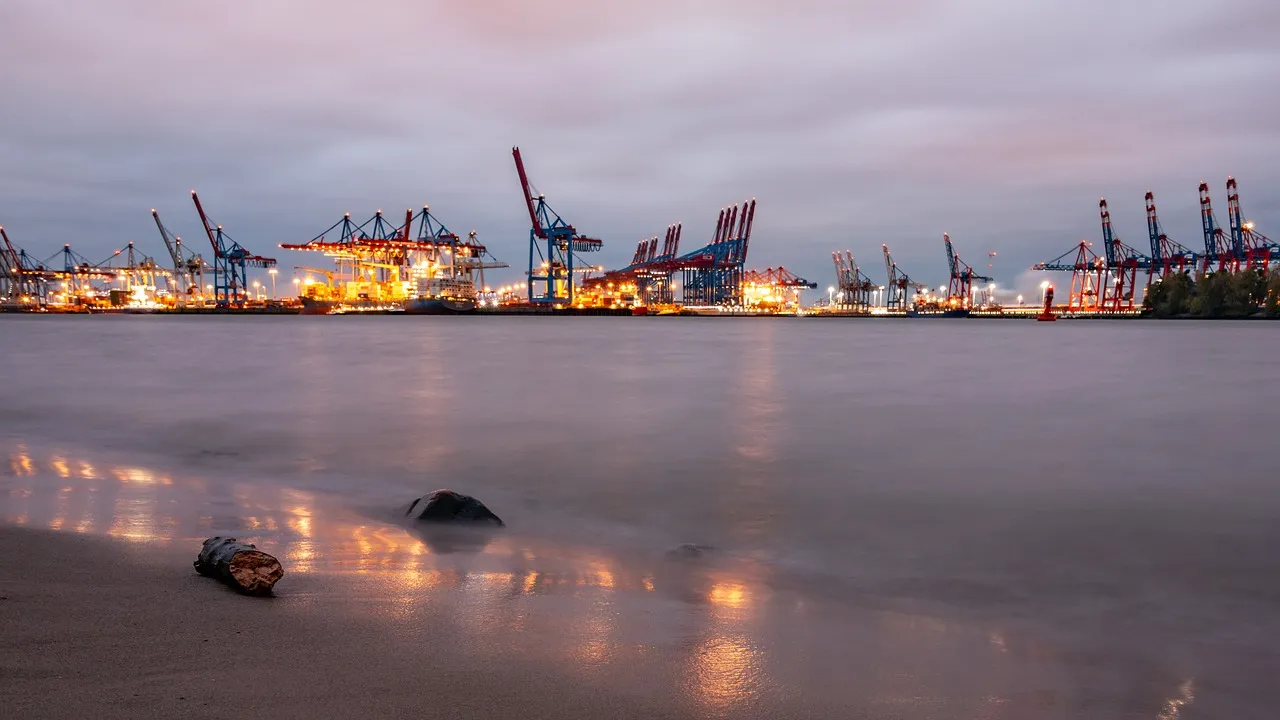
Re-export trade, also known as entrepôt trade, refers to international trade where the buying and selling of imported and exported goods do not occur directly between the producing and consuming countries, but rather through a third country. For instance, Country A, where Mr. Jian is based, produces a certain specialty product. However, due to various trade policies or market factors, this product cannot be directly sold to Country C, which has a strong demand. In this scenario, Mr. Jian first exports the product to Country B. Then, traders in Country B re-export the product to Country C. Here, Country B plays the role of the intermediary in the re-export trade.
The reasons for the occurrence of re-export trade are diverse. On one hand, trade restrictions are a significant factor. For example, if there are trade barriers between two countries, such as high tariffs or import quotas, goods can be cleverly rerouted through a third country to circumvent these limitations. On the other hand, market advantages can also drive re-export trade. Certain countries or regions possess mature trade infrastructure, well-developed financial service systems, and extensive trade experience, making them ideal transshipment hubs for re-export trade. Hong Kong, for example, has long held a prominent position in re-export trade due to its unique geographical and economic advantages.
Transit Trade: The Efficient Passage
Transit trade, in contrast, is more straightforward. It refers to trade activities where export goods from one country pass through the territory of another country without undergoing substantial processing that alters the nature of the goods, and are then transported to a third country while largely maintaining their original state. Suppose Mr. Jian company needs to transport goods from Country D to Country E, and the transportation route between these two countries happens to pass through Country F. Mr. Jian simply needs to complete the necessary transit procedures according to the regulations of Country F, and the goods can smoothly pass through.
The key to the existence of transit trade lies in geographical location. Some countries are situated at crucial transportation nodes, becoming unavoidable transit points for the movement of goods. Singapore, for instance, is located at the Strait of Malacca, a vital global shipping hub. A large volume of goods transits through Singapore, fostering the prosperity of its transit trade. Concurrently, excellent infrastructure and an efficient customs clearance environment are also crucial conditions that attract transit trade. Efficient ports, convenient transportation networks, and streamlined customs procedures enable goods to pass through the transit country quickly and smoothly.
Distinguishing Re-export Trade from Transit Trade
From the perspective of ownership, in re-export trade, the ownership of goods shifts when they are in the transit country; the traders in the transit country become the owners of the goods. However, in transit trade, the ownership of the goods always remains with the exporter or importer; the transit country is not involved in any change of ownership. In terms of trade objectives, re-export trade is often conducted for commercial purposes such as circumventing trade restrictions or capitalizing on price differentials. Transit trade, on the other hand, primarily leverages the geographical advantages of the transit country to facilitate the convenient transport of goods, with the main objective of efficiently moving goods from the exporting country to the importing country.
New Trade Frontiers: What Are Your Thoughts on Re-export and Transit Trade?
Re-export trade and transit trade each play distinct roles and serve unique functions on the international trade stage. With the continuous advancement of global economic integration, their development faces new opportunities and challenges. For enterprises engaged in international trade, a thorough understanding and appropriate utilization of these two trade methods may pave the way for broader horizons in the complex and ever-changing international market. Have you encountered re-export trade or transit trade in your international trade experiences? We welcome you to share your experiences and insights in the comments section, and let us explore the broader possibilities of trade together.

Recent Comments (0) 0
Leave a Reply