In today's globalized business wave, trade interactions are increasingly frequent, and tariff issues often become a focal point for many businesses. Today, let's discuss re-export trade and its role in tariff evasion, examining what it entails and what impacts it brings.
I. What Exactly is Re-export Trade?
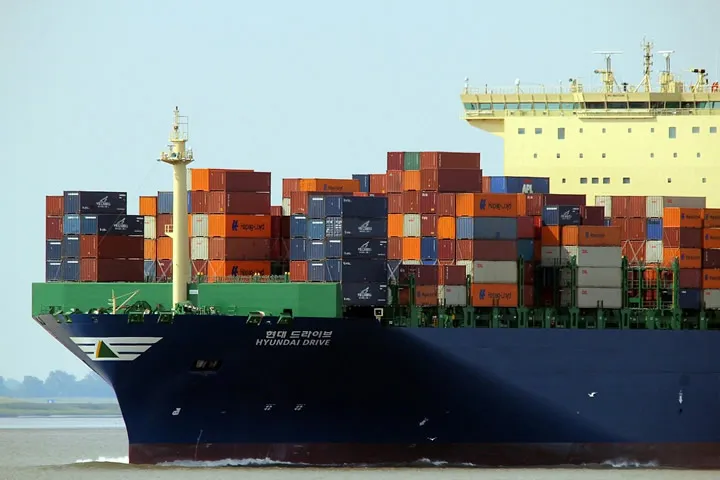
Re-export trade, simply put, is a trade method where a goods-producing country sells goods to a third country (transit country), which then sells the goods to a consuming country. For example, Country A produces a batch of specialty goods, originally intended for direct export and sale to Country B. However, considering the high tariffs Country B imposes on such goods, the goods are first exported to Country C (transit country). After some necessary processing or simply transit operations in Country C, they are then exported from Country C to Country B. This way, it becomes possible to leverage Country C's relatively favorable trade policies and other factors to achieve the goals of reducing costs and avoiding high tariffs.
II. How Does It Evade Tariffs?
This involves several key aspects. Firstly, the choice of transit country is crucial. Professionals in this field, like Zhongmaoda, will select countries or regions with more lenient trade policies, relatively lower tariff rates, or special trade agreements to serve as transit hubs. For instance, some island nations might have preferential policies for the import and export of many goods due to their unique economic development models.
- Secondly, the method of handling goods during transit also requires careful consideration. Some might involve mere transshipment, ensuring the legal and compliant circulation of goods in transit country ports or other areas without substantial processing changes. Others, depending on specific circumstances, might involve minor processing, packaging, or other handling in the transit country, enabling the goods to meet different commodity classification standards upon re-export, thereby qualifying for lower tariff rates.
For example, Mr. Ji company originally planned to export a batch of electronic products to a certain market, which imposed high tariffs on finished electronic products of this type. Consequently, Mr. Ji utilized re-export trade, first exporting these electronic products as components to a transit country. After simple assembly in the transit country, they were then exported to the target market in a new product form, which could then potentially enjoy relatively lower tariff treatment.
III. Does Re-export Trade for Tariff Evasion Involve Risks?
The answer is yes. Although re-export trade theoretically offers the possibility of tariff evasion, it also harbors numerous potential risks. On one hand, international trade rules are complex and ever-changing. If the relevant rules are not accurately understood, non-compliant behaviors can easily occur during re-export trade operations, leading to situations like goods being seized or fines being imposed. Just like Mr. Ji company, when attempting re-export trade to evade tariffs, it encountered problems during transit, resulting in delayed delivery times and additional costs, because it did not accurately understand the detailed provisions of the trade agreement between the transit and destination countries.
- On the other hand, there are some unscrupulous intermediaries or non-standard operating procedures in the market that might use re-export trade as a pretext for fraudulent or other illegal activities, which also poses significant risks to businesses. Therefore, when considering re-export trade for tariff evasion, businesses must choose legitimate, professional, and reputable partners like Zhongmaoda, while also thoroughly understanding relevant international trade laws and policies themselves.
Conclusion: Prudent Deliberation, Rational Application
Re-export trade, as a potential method for tariff evasion, has indeed attracted the attention of many businesses. However, we must clearly recognize its pros and cons. In a globalized trade environment, we should be adept at utilizing various legitimate means to reduce costs and expand markets, but at the same time, we must always remain cautious to avoid falling into unnecessary risks due to a blind pursuit of tariff evasion. We hope that all business operators, when facing the choice of re-export trade, can fully weigh the options and make decisions most suitable for their business development. We also welcome everyone to discuss more topics about re-export trade in the comments section!

Recent Comments (0) 0
Leave a Reply