In today's globalized commercial tide, import and export businesses are flourishing, and import and export agency services have consequently become valuable assistants for many enterprises. However, when it comes to import and export agency fees, many people may have a vague understanding. Today, let's have a good discussion on this topic and unveil the mystery behind import and export agency fees.
I. What Factors Influence Import and Export Agency Fees?
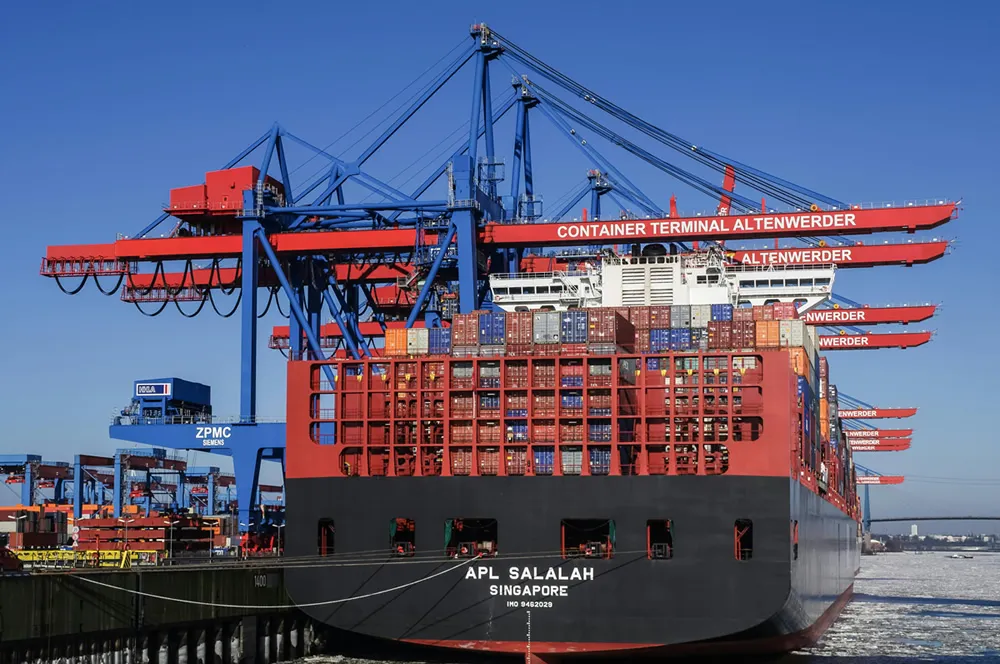
Cargo Type: The import and export agency fees for different types of goods can vary significantly. For instance, for ordinary daily necessities, the agency process is relatively simple, and the risks are lower, so the fees might be more affordable. However, for products like high-tech goods or dangerous goods, due to more regulatory requirements, special transportation conditions, and potentially higher risks, the agency fees are often higher.
Trade Method: Different trade methods such as general trade and processing trade have varying operational processes and complexities in import and export agency. For example, processing trade may involve additional steps related to bonded areas and material management, which will cause the agency fees to fluctuate according to the specific trade method.
Service Scope: The scope of import and export agency services is broad, covering customs declaration, customs inspection, transportation arrangements, and document processing, among other things. If an enterprise requires the agency to provide more comprehensive and detailed services, such as assistance with complex customs affairs consultation or trade finance advice, the corresponding agency fees will naturally be higher.
II. Common Charging Models for Import and Export Agency Fees
- Per-Order Fee: This is a relatively common model where the agency charges a fixed fee for each import and export business order. This method is easier for businesses with low transaction volumes and relatively stable order values to calculate costs.
- Percentage of Cargo Value Fee: This means charging agency fees as a certain percentage of the value of the imported or exported goods. This is usually applicable to businesses with high cargo values. However, for enterprises, the higher the cargo value, the higher the agency fees paid, requiring careful consideration in cost control.
- Hybrid Fee: This combines the characteristics of per-order fees and percentage of cargo value fees. Part of the fee might be a fixed per-order charge, while another part is calculated based on the cargo value percentage. This can balance different business situations to some extent and allows for flexible fee adjustments.
III. How to Reasonably Control Import and Export Agency Fees?
Firstly, enterprises should clarify their own import and export business needs, clearly understanding what specific services they require from the agency, and avoid unnecessary service items that increase costs. For example, if an enterprise has its own professional customs declarants and only needs the agency to assist with transportation arrangements, there is no need to pay for a full suite of agency services that includes customs declaration.
Secondly, compare the prices and service scopes of several import and export agency companies. **Taking Zhongmaoda as an example**, you can thoroughly understand their charging standards and service advantages in different business scenarios, and then compare them comprehensively with other similar agencies to select the partner with the highest cost-effectiveness.
Finally, maintain good communication with the agency. During the business development process, adjust service content and pricing terms appropriately based on the actual situation. If the business volume increases significantly or the business type changes, negotiate in a timely manner whether the agency fees can be reasonably optimized.
In summary, import and export agency fees are not a simple number; they involve numerous factors and complex charging models. Enterprises can only better control costs and select suitable agency partners for their import and export businesses, making their international business journey smoother, by deeply understanding these aspects. We hope all business owners will take this seriously and put more effort into the matter of import and export agency fees. We also welcome everyone to share your experiences and views in the comment section!

Recent Comments (0) 0
Leave a Reply