In the complex and multifaceted world of international trade, the concepts of re-export trade and indirect trade can often be perplexing. However, they play a crucial role in expanding global business footprints and optimizing resource allocation. Today, let us delve deeper into these two trade forms and unveil their mysteries.
I. Re-export Trade: The "Transit Station" in the Trade Arena
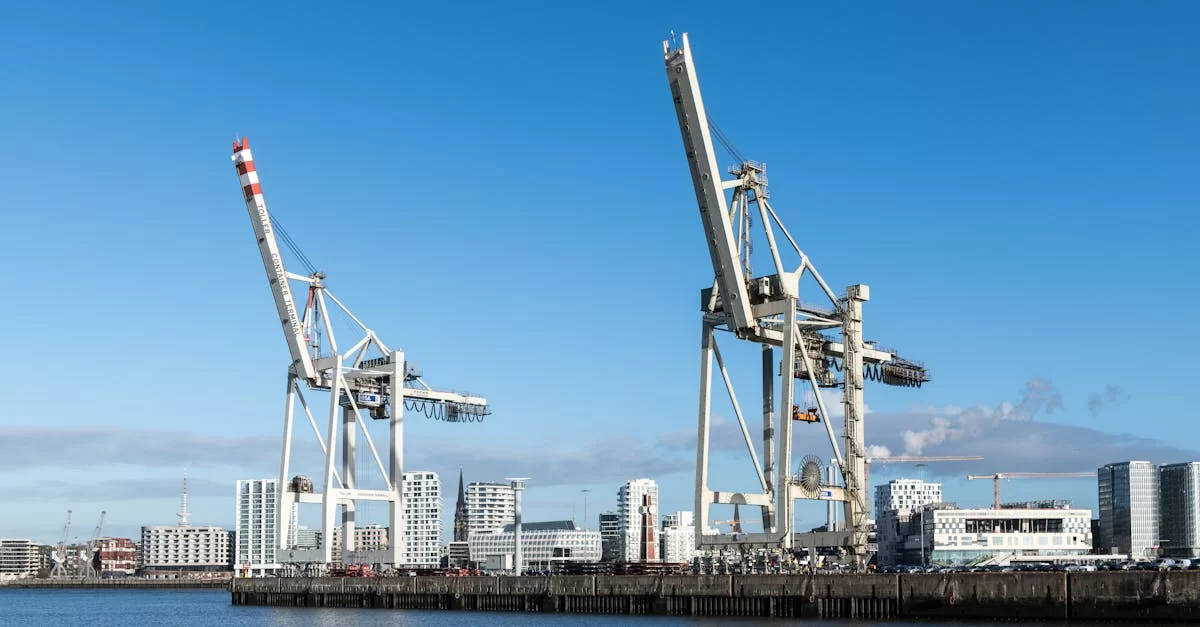
Re-export trade, simply put, is trade activity where goods are transacted between the country of production and the country of consumption through a third country. For instance, Country A produces a batch of unique handicrafts, originally intended for direct sale to consumers in Country C. However, due to certain trade policies, tariff barriers, or market channel factors, these handicrafts are first shipped to Country B. In Country B, after a series of operations, such as repackaging or relabeling (of course, specific operations vary by situation), they are then exported from Country B to Country C. In this process, Country B acts as the "transit station" for re-export trade.
The advantages of re-export trade are quite evident. For the producing country, it can bypass high tariff barriers set by some target consuming countries, allowing products to enter the target market at more competitive prices. For the consuming country, re-export trade can sometimes offer a more diverse product selection, as the re-exporting country may optimize product combinations or introduce styles not commonly found in the production country's domestic market. For the re-exporting country itself, re-export trade can drive the development of local logistics, warehousing, finance, and other related service industries, creating more job opportunities and economic benefits.
II. Indirect Trade: A Trade Model with an "Underlying Story"
Indirect trade is a relatively broader concept. It refers to trade between the country of production and the country of consumption through a third country, where the third country often acts as an intermediary, but its degree of involvement and specific operational methods may be more diverse than in re-export trade. For example, a company in producing country A and a company in consuming country C may not directly engage in trade business but instead facilitate the transaction through a trader in third country D. In this process, the trader might be responsible for finding suitable sources, coordinating transportation, handling trade documents, and many other matters.
The reasons for the emergence of indirect trade are also varied. On one hand, it could be that companies in the producing and consuming countries are not sufficiently familiar with each other's markets and lack the channels and experience to conduct trade directly, thus needing to rely on the expertise of traders in a third country to complete the transaction. On the other hand, it might be for risk diversification purposes; by introducing an intermediary from a third country, various risks such as credit risk and market risk during the trade process can be reduced to a certain extent.
III. Similarities and Differences Between Re-export Trade and Indirect Trade
The similarity lies in the fact that both involve three countries, and a third country plays a role in the trade process. Whether it's the "transit station" role in re-export trade or the intermediary role in indirect trade, the third country is an indispensable link in the trade chain.
- The difference lies in the fact that re-export trade focuses more on the actual physical movement of goods through the third country, where there are often substantive handling processes for the goods in the third country, such as the repackaging mentioned above.
- Indirect trade primarily emphasizes the facilitation of trade between the producing and consuming countries through an intermediary in a third country. The goods do not necessarily have to pass through the third country; the key is that the facilitation of the trade leverages the power of the third country.
Conclusion: Exploring New Trade Paths
Understanding the characteristics and differences between re-export trade and indirect trade is of great significance for companies and professionals engaged in international trade. In today's era of deepening globalization, the rational use of these two trade models can perhaps open up new market spaces for businesses, optimize trade processes, and reduce trade costs. Mr. Niu once stated that after in-depth research into these two trade methods, he gained new perspectives on expanding his company's international business. So, dear readers, what are your thoughts and insights on re-export trade and indirect trade? You are all welcome to discuss, and perhaps we can spark more innovative trade ideas!

Recent Comments (0) 0
Leave a Reply