When a precision machine tool is shipped from a Chinese factory to a German automaker, few notice the "invisible hand" behind it – the machine export agent. This seemingly niche industry is actually a critical hub in the global industrial supply chain. Mr. Yang, who has been an export agent for 15 years, often says: "We are not just simple middlemen; we are the 'decoders' that enable Chinese manufacturing to break through language, regulatory, and logistical barriers." Today, let's unveil this multi-billion-dollar hidden track.
Why Do You Need a Professional Agent?

Last year, Mr. Yang environmental equipment factory attempted to export independently for the first time but had its goods detained at Turkish customs for three months due to incomplete certification documents, incurring losses of over a million. The complexity of machine exports far exceeds that of ordinary goods: from EU CE certification to US FCC standards, from Russia's Customs Union certification to Saudi SASO, nearly 200 markets worldwide each have their own "rules of the game." The value of a professional agent lies in:
- Real-time updates to technical regulatory databases for 200+ global economies
- Anticipating "hidden minefields" in target country customs clearance (e.g., Brazil requires equipment nameplates to be in Portuguese)
- Optimizing logistics solutions (a certain laser cutting machine saved 18 days by using China-Europe freight trains compared to sea freight)
The Three Core Capabilities of Agency Services
Senior consultants at Zhongmaoda summarize the industry's golden triangle:
- Regulatory Breakthroughs: Helping a CNC machine tool factory in Jiangsu obtain Vietnam CR certification within 48 hours
- Cost Control: Reducing tariffs by 37% for a Shenzhen robotic arm enterprise through classification techniques
- Risk Mitigation: Designing an LC + escrow combined payment solution for a Shandong injection molding machine manufacturer
It's worth noting that certification fees in emerging markets rose by an average of 22% in 2023, but professional agents can still help clients save 15-30% on costs due to economies of scale.
Five Pitfalls When Choosing an Agent
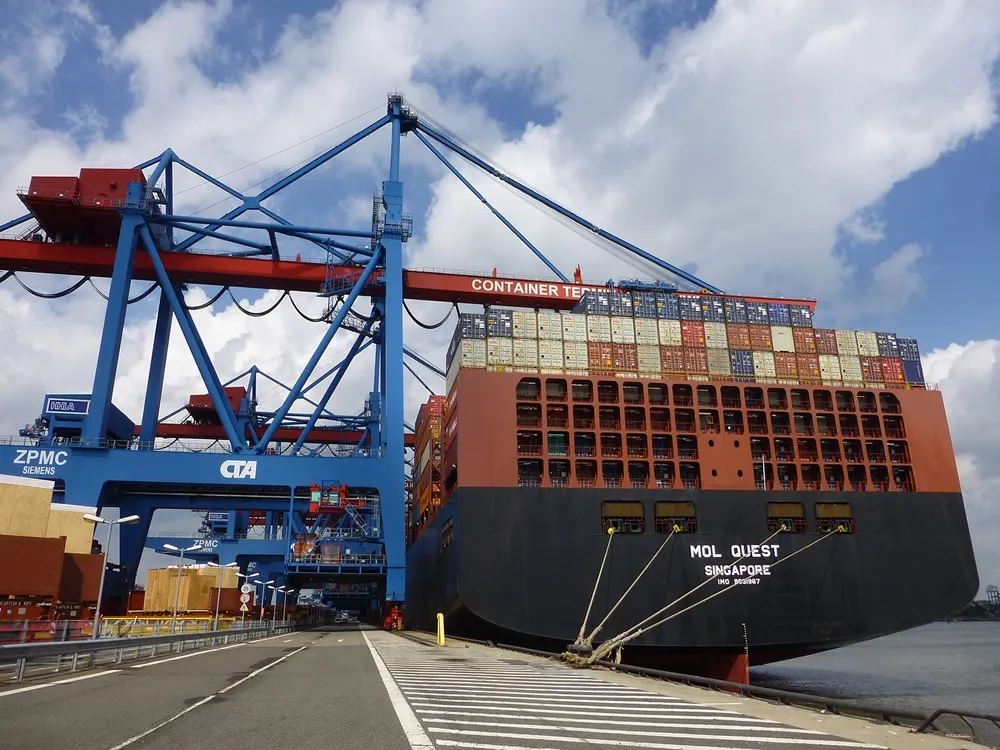
Mr. Yang reveals industry irregularities: "Some agents who claim to be 'all-inclusive' can't even distinguish basic customs codes." Be wary of:
- Promising "100% customs clearance" (actual clearance depends on the destination country's policies)
- Quotes that don't include hidden fees (e.g., Saudi Arabia requires payment for SABER system registration)
- Lacking physical overseas partners (no one on-site to coordinate during inspections)
- Ignoring equipment compatibility (Middle East voltages are often 415V/50Hz)
- Lack of after-sales guarantee (a certain Indonesian client experienced a six-month delay in equipment repair because the agent absconded)
The Future is Here: The Rise of Digital Agents
Blockchain is rewriting industry rules. Through smart contracts:
- Automatically capturing updates to national regulations (e.g., EU New Machinery Regulation 2023/1230)
- AI pre-screening document accuracy reaching 99.2% (according to test data)
- Visual tracking of each piece of equipment's global compliance status
However, Mr. Yang reminds: "No matter how advanced digital tools are, they cannot replace the 'customs connections' accumulated by experienced agents over 20 years."
Is Your Equipment Ready to Go Global?
The next time you see "Made in China" construction machinery operating on an African construction site, spare a thought for the agents behind the scenes, arguing with customs over HS codes and staying up late for certification documents. In the **Globalization 2.0 era**, choosing an agent is no longer a cost issue but a strategic decision. Feel free to share your export stories in the comments section, or leave the export challenges you're most curious about – perhaps the next customs clearance secret lies within our conversation.

Recent Comments (0) 0
Leave a Reply