In the global trade landscape, Hong Kong, with its unique geographical location and advanced advantages in finance, logistics, etc., has always held a significant position in re-export trade. Within Hong Kong's re-export trade network, the Chinese Mainland plays an even more crucial role. Today, let us delve into how large the Mainland's share is in Hong Kong's re-export trade, unveiling the trade mysteries behind it.
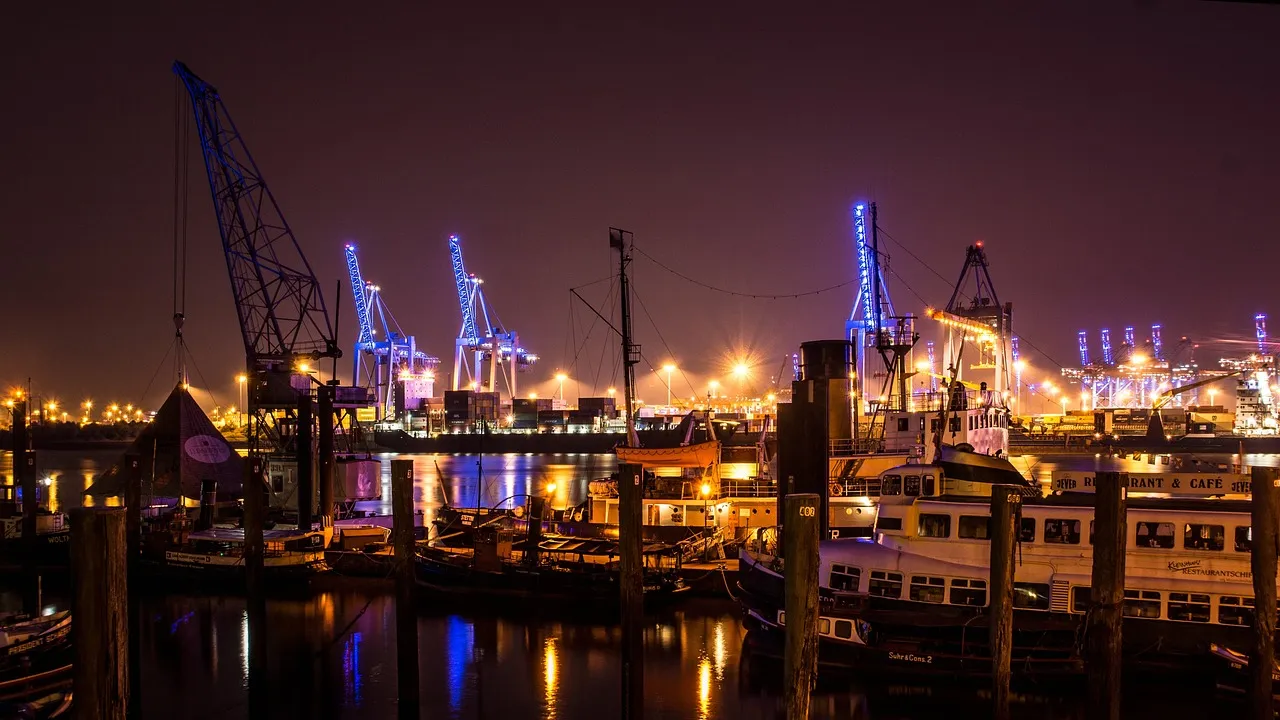
Overview of Hong Kong's Re-export Trade
Re-export trade, simply put, is when goods are not directly traded between the place of production and the place of consumption, but are instead transshipped through a third location. As a globally renowned free trade port, Hong Kong has a long history of re-export trade. It boasts excellent port facilities, an efficient logistics system, and a trade network closely connected to the world. For years, goods from all over the world have transited through Hong Kong before being dispatched to other regions. Hong Kong's re-export trade has not only driven local economic development and created numerous employment opportunities, but also fostered the prosperity of related service industries such as finance, insurance, and shipping.
The Mainland's Share in Hong Kong's Re-export Trade
For a long time, the Chinese Mainland has been a crucial partner in Hong Kong's re-export trade. Data shows that the Mainland's share in Hong Kong's re-export trade is quite substantial. Taking the origin of goods as an example, the Mainland is a significant supplier for Hong Kong's re-export goods. Numerous Mainland-produced products, such as electronics, textiles, and toys, are re-exported to various parts of the world via Hong Kong. Leveraging the Mainland's strong manufacturing base, these products possess significant competitiveness in terms of price and quality.
Regarding re-export destinations, the Mainland also holds a significant position. A large portion of goods imported by Hong Kong from other countries and regions are re-exported to the Mainland. For instance, high-end machinery and advanced electronic components meet the Mainland's needs for industrial upgrading and economic development. According to relevant statistics, in recent years, the Mainland's share in both the origin and destination of Hong Kong's re-export trade has reached a high proportion, even exceeding half in certain years for specific categories of trade.
Analysis of Factors Influencing the Share
First, geopolitical factors cannot be overlooked. Hong Kong and the Mainland are geographically adjacent, with convenient transportation, making both land and sea transport extremely easy. This significantly reduces trade costs and improves transport efficiency. Second, economic structural complementarity is also key. The Mainland has a developed manufacturing sector, while Hong Kong excels in finance, trade services, and other areas. Through re-export trade, both sides achieve optimized resource allocation. Furthermore, policy factors have also played a driving role. A series of economic and trade cooperation agreements signed between the Mainland and Hong Kong have provided policy support and facilitation measures for re-export trade.
Future Outlook
With the advancement of the 'Belt and Road' initiative and the deepening construction of the Guangdong-Hong Kong-Macao Greater Bay Area, trade cooperation between Hong Kong and the Mainland is expected to further deepen. Hong Kong can leverage its advantages to play a greater bridging role in re-export trade, strengthening trade ties between the Mainland and countries and regions along the initiative. The Mainland will also continue to upgrade its manufacturing capabilities, providing more high-value-added products for Hong Kong's re-export trade. It is believed that the Mainland's share in Hong Kong's re-export trade will remain stable in the future and may further increase as cooperation deepens. Let us look forward to both sides creating more brilliance in the field of re-export trade.

Recent Comments (0) 0
Leave a Reply