On the grand stage of commercial activities, two models, agent import and consignment sales, often appear, yet many individuals are not entirely clear about the subtle differences between them. Today, let us delve deep together and understand what exactly distinguishes agent import from consignment sales.
I. The Vast Difference in Business Essence
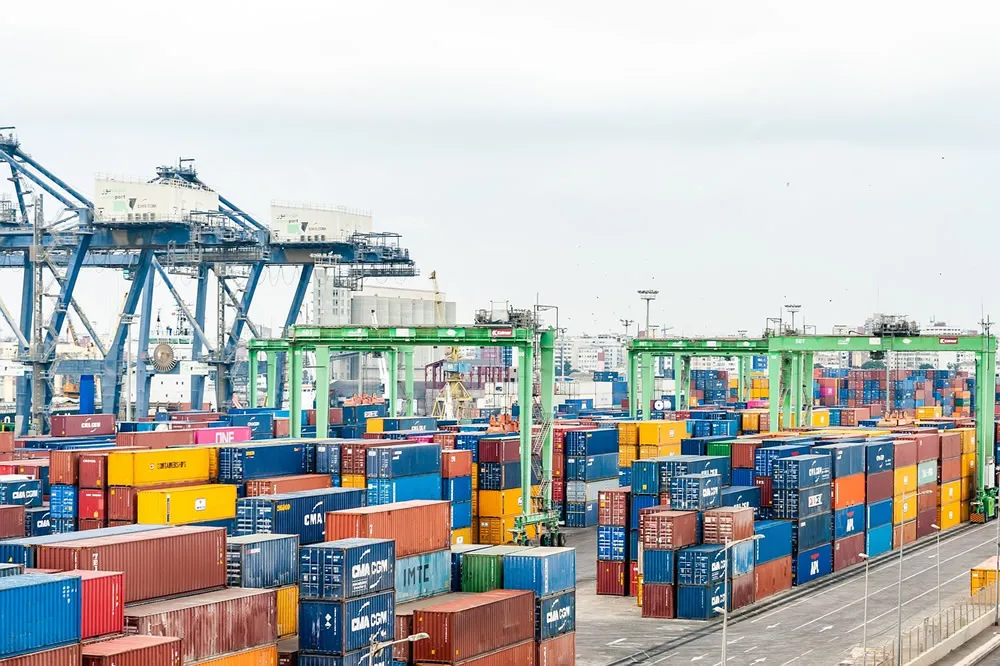
Agent import, as the name suggests, refers to an agent undertaking a series of import-related business operations as assigned by the principal. For instance, Mr. Zhuang wants to purchase a batch of specialty goods from abroad for domestic sales but is completely unfamiliar with import procedures and customs formalities. In such a case, he can entrust a professional import agent, such as Zhongmaoda, to handle the arrangements. The import agent is primarily responsible for communicating with foreign suppliers, signing import contracts, arranging transportation, customs clearance, and inspection, and other matters to ensure the smooth import of goods into the country, for which they charge a certain agency fee.
Consignment sales, on the other hand, is a different scenario. Consignment sales typically refer to a seller accepting the entrustment of a manufacturer or supplier to help sell their products. For example, Mr. Zhuang owns a retail store, and a brand supplier approaches her, hoping she will consign their products. Mr. Zhuang does not need to be responsible for production or procurement; she only needs to utilize her store resources and sales channels to sell the products provided by the supplier, and then earn a commission based on the agreed-upon proportion of sales revenue.
II. Variations in Risk Bearing
In agent import business, although the import agent is responsible for handling numerous import procedures, the ownership of the goods generally belongs to the principal. This means that if the goods are damaged or lost during transportation, unless caused by the gross negligence of the import agent, the risk is primarily borne by the principal. For instance, when Zhongmaoda acted as an agent for importing a batch of electronic products, despite exercising due diligence, the goods were partially damaged due to severe weather during sea transport. In such situations, the loss is generally borne by the owner of the goods, i.e., the principal.
In consignment sales, the seller bears a certain responsibility for the safekeeping of the products after receiving them from the supplier. If the products are damaged due to reasons attributable to the seller themselves, such as improper storage, the seller is liable for the corresponding loss. Just as when Mr. Zhuang was consigning a certain cosmetic product, a portion of the cosmetics was ruined because a leak in the store's warehouse was not discovered in time, Mr. Zhuang would be responsible for this loss.
III. Distinct Characteristics in Relationships with Upstream and Downstream Parties
An import agent is positioned between the principal and the foreign supplier. On one hand, they negotiate with foreign suppliers on product prices, quality, delivery times, and other aspects. On the other hand, they work according to the principal's requirements and instructions, reporting the progress of the import business to the principal. They act more like a bridge, connecting both domestic and foreign parties to ensure the smooth execution of import business.
Consignment sellers, on the other hand, primarily interact with suppliers and consumers. They obtain products from suppliers and then sell them to consumers through various sales strategies, with a focus on developing the market and increasing product sales to earn more consignment commissions. For example, to boost sales of consigned products, Mr. Zhuang might organize promotional events or optimize store displays to attract consumers to purchase.
Stop Confusing Them!
Through the analysis above, we can clearly see that agent import and consignment sales have distinct differences in their business essence, risk bearing, and relationships with upstream and downstream parties. Understanding these differences is crucial for businesses looking to expand their operations and for entrepreneurs preparing to enter related industries. We hope that in the future, when encountering similar business models, everyone can accurately differentiate them and make more informed business decisions! We also welcome everyone to share their insights and experiences on these two business models in the comments section.

Recent Comments (0) 0
Leave a Reply