In today's wave of globalization, the forms of international trade are becoming increasingly diverse, and the model of re-export trade value-added is gradually emerging, attracting much attention. So, what exactly is re-export trade value-added? What potential and opportunities does it hold? Today, let's delve into this fascinating topic of international trade together.
I. Connotations of Re-export Trade Value-Added
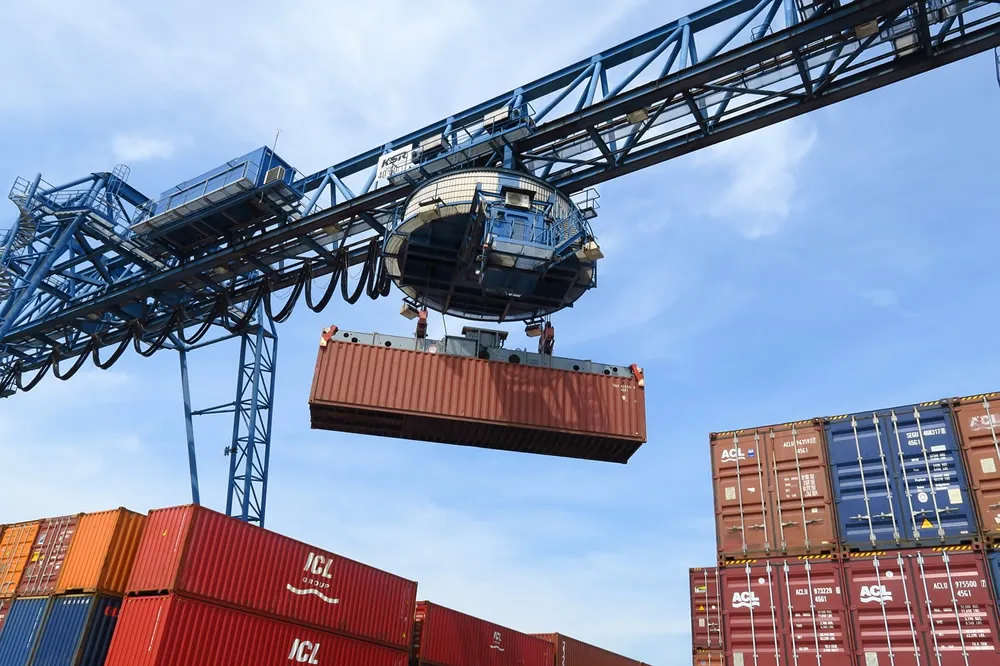
Re-export trade, simply put, is a trade method where a goods-producing country first sells goods to a re-export trader, who then resells them to a consuming country. Re-export trade value-added, on this basis, refers to the enhancement of the goods' value through further processing, packaging, allocation, and other operations, building upon their original value.
For instance, Mr. Mei purchased a batch of ordinary wooden furniture components from a certain country. These components had relatively limited value in their country of origin. However, during the re-export trade process, Mr. Mei meticulously processed these components, such as sanding, painting, pairing them with exquisite hardware accessories, and redesigned the packaging, transforming them into high-end, stylish finished wooden furniture products. When these value-added furniture pieces are resold to customers in the consuming country, their price is often much higher than the original value of the components. This is the significant benefit brought by re-export trade value-added.
II. Advantages of Re-export Trade Value-Added
- First, it enhances product competitiveness. Products that have undergone value-added processing may be optimized in terms of quality, appearance, and function, making it easier for them to stand out in the international market and attract more consumers.
- Second, it increases profit margins. Just like the furniture example mentioned earlier, components that were originally of low value see a significant increase in selling price after re-export trade value-added, bringing more substantial profits to traders.
- Furthermore, it helps diversify market risks. Different countries and regions have varying demands for products of different grades and characteristics. Through re-export trade value-added, products can be flexibly adjusted according to the specific demands of different markets, thereby better adapting to market changes and reducing risks caused by reliance on a single product or market fluctuations.
III. How to Successfully Implement Re-export Trade Value-Added
Achieving success in the re-export trade value-added sector is not easy and requires efforts from multiple aspects.
On one hand, it is crucial to accurately grasp market demand. When engaging in re-export trade value-added business, Mr. Mei invests a significant amount of time and energy in market research to understand consumers' preferences, demand trends, and price acceptance levels in different countries. Only by doing so can she determine the most appropriate value-added operations for a product, ensuring that the value-added product meets market demand and sells smoothly.
On the other hand, focusing on product quality and innovation is essential. During the value-added process, it should not merely be superficial work; the intrinsic quality of the product must be genuinely enhanced. At the same time, continuous innovation is necessary, introducing new design concepts and technical processes to keep products fresh and attractive, thereby ensuring an unbeatable position in the fierce international market competition.
Conclusion: Seize Re-export Trade Value-Added Opportunities, Create International Trade Success Together
Re-export trade value-added undoubtedly opens up a new development path for international trade, containing infinite business opportunities and potential. In this competitive era, both traders and related enterprises should pay close attention to this field and actively explore re-export trade value-added models suitable for themselves. Only in this way can they shine on the grand stage of international trade and achieve greater commercial value. So, are you ready to seize the opportunities brought by re-export trade value-added? We welcome your comments and discussions in the comment section!

Recent Comments (0) 0
Leave a Reply