In the wave of globalized trade, South American re-export trade is gradually becoming a focal point for many trade practitioners. Imagine goods departing from Asia, transiting through a port in South America, and then being transported to other destinations. What business mysteries are hidden behind this? Today, let's delve together into the world of South American re-export trade.
Advantages of South American Re-export Trade
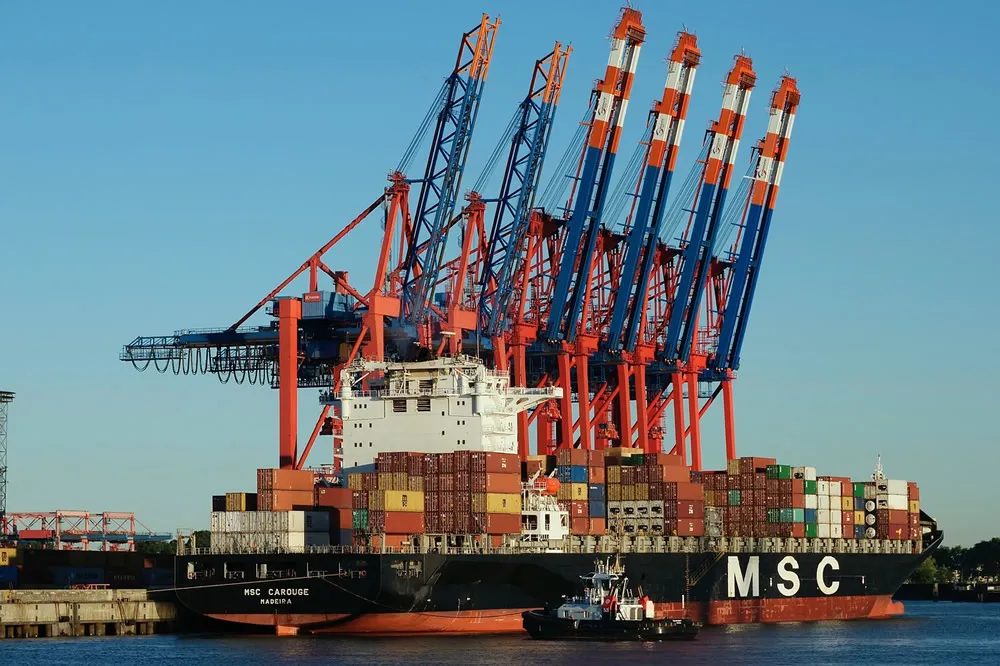
First, South America's unique geographical location provides immense convenience for its re-export trade. South America is located in the southern part of the Western Hemisphere, bordered by the Atlantic Ocean to the east, the Pacific Ocean to the west, the Caribbean Sea to the north, and faces Antarctica across the Drake Passage to the south. Numerous excellent ports, such as Santos Port in Brazil and Buenos Aires Port in Argentina, provide ideal locations for cargo transit. These ports have complete facilities, strong throughput capacity, and can efficiently handle various types of goods.
Second, to promote the development of re-export trade, some South American countries have introduced a series of preferential policies. For example, some countries have established free trade zones, implementing special tax policies and simplified customs procedures within these zones. Taking the Colón Free Trade Zone in Panama as an example, it is the largest free trade zone in the Western Hemisphere, attracting numerous global enterprises to conduct re-export trade business there, significantly reducing companies' operating costs and improving trade efficiency.
Operational Process of South American Re-export Trade
The operational process of South American re-export trade is relatively complex. Generally speaking, domestic suppliers first sign trade contracts with foreign buyers. Subsequently, goods depart from domestic ports and are transported to a South American transit port. Upon arrival at the transit port, the goods are stored or undergo simple processing in local bonded warehouses. During this period, professional re-export trade service providers such as Zhongmaoda assist in handling related customs clearance, warehousing, and logistics procedures. Finally, the goods are then transported from the South American transit port to their final destination. In this process, document processing is crucial; various documents such as bills of lading, invoices, and packing lists all need to be prepared and processed according to re-export trade requirements to ensure the smooth flow of goods.
Challenges Faced by South American Re-export Trade
However, South American re-export trade is not without its challenges. On one hand, infrastructure development in some South American countries still needs improvement. Although there are some large ports, inland transportation networks may be insufficient, with issues such as poor road conditions and limited rail capacity, which could lead to delays in cargo transportation and increase logistics costs.
On the other hand, the trade environment in South America presents a certain degree of uncertainty. Trade regulations and policies vary frequently across different countries, and customs enforcement standards are not uniform. For example, some countries might suddenly raise tariffs or strengthen import controls on specific products. This requires businesses engaged in re-export trade to constantly monitor local policy developments and adjust their trade strategies in a timely manner.
How to Seize Opportunities in South American Re-export Trade
For businesses interested in South American re-export trade, thorough preliminary research is essential. Gain a deep understanding of trade policies, market demands, port conditions, and other factors in different South American countries. Collaborating with professional and reliable re-export trade service providers like Zhongmaoda allows businesses to leverage their extensive experience and resources to reduce trade risks. At the same time, establishing a robust supply chain management system ensures timely supply of goods and smooth transportation. When facing a complex and volatile trade environment, maintain flexibility and adjust operational strategies promptly to better seize the opportunities presented by South American re-export trade.
South American re-export trade is a field full of potential. While challenges exist, as long as we deeply understand and carefully strategize, it is possible to carve out our own path in this trade blue ocean and create substantial commercial value. Let's take proactive action and explore the infinite possibilities of South American re-export trade!

Recent Comments (0) 0
Leave a Reply