Hey everyone! In this globalized era, many of the daily necessities we use in our lives might be imported from abroad. But did you know that for these daily necessities to smoothly enter the domestic market, they must pass through a crucial gateway—import customs clearance, which involves a series of fees? Today, let's delve into the details of import customs clearance fees for daily necessities, giving you a clearer understanding of what's behind it.
II. Main Body: Composition and Influencing Factors of Daily Necessities Import Customs Clearance Fees
(I) Tariffs
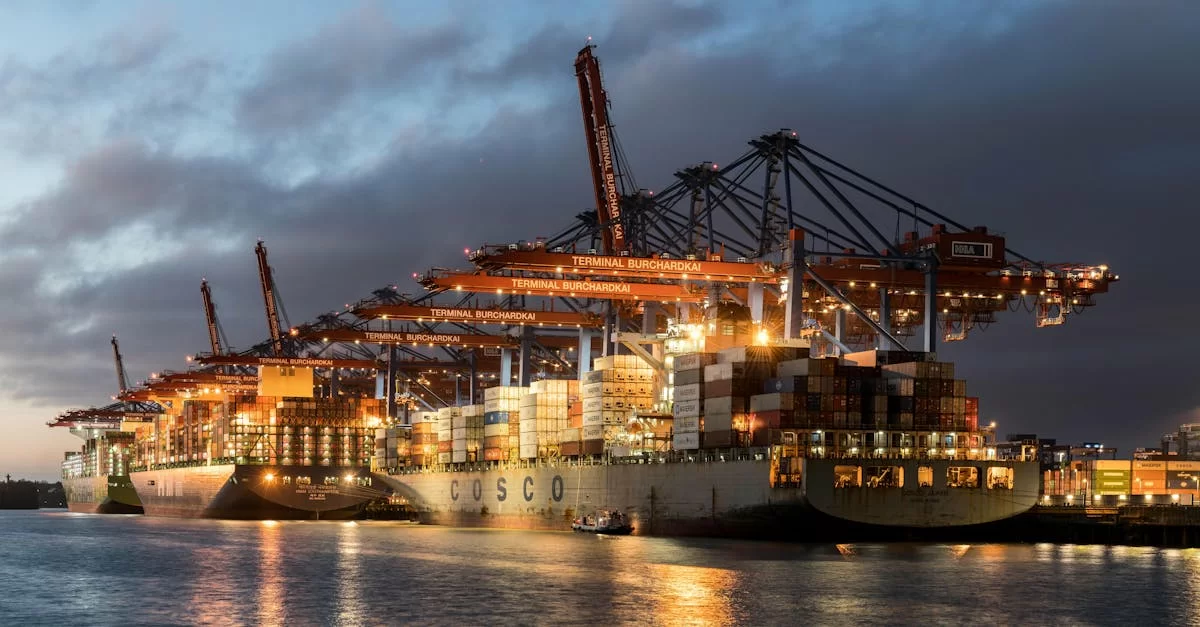
Tariffs are a significant component of import customs clearance fees. The tariff rate is determined based on factors such as the type of daily necessity and its country of origin. For example, tariffs on some high-end cosmetics might be relatively high, while tariffs on ordinary household daily necessities may be slightly lower. The calculation of tariffs is generally based on the dutiable value of the goods multiplied by the corresponding tariff rate. Therefore, before importing daily necessities, it's crucial to accurately understand the tariff situation for their respective categories; otherwise, managing these costs can be difficult.
(II) Value-Added Tax (VAT)
In addition to tariffs, VAT is another part that cannot be overlooked. VAT is a tax levied during the circulation of goods, and imported daily necessities are also subject to it. It is usually calculated as (Dutiable Value + Tariff) × VAT Rate. The VAT rates for different daily necessities may vary. Generally, common daily necessities have a VAT rate of around 13%, but some special categories may differ. Therefore, when calculating import customs clearance fees, VAT must also be accounted for accurately.
(III) Consumption Tax (Applicable to Some Daily Necessities)
Certain specific daily necessities, such as high-end cosmetics, precious jewelry, and jade, may also be subject to consumption tax. The collection of consumption tax has its specific scope and tax rate standards. If the imported daily necessities fall within the scope of taxable consumption goods, then this portion of the fee must also be included. The calculation method is based on relevant regulations, and the specifics depend on the particular category of the imported daily necessities.
(IV) Customs Declaration and Inspection Fees
When handling import customs clearance procedures for daily necessities, professional personnel must carry out customs declaration and inspection operations, which incur customs declaration and inspection fees. This fee is generally paid to customs brokers or freight forwarders, who are responsible for compiling relevant documents, filling out declaration and inspection forms, and other complex tasks. The amount of the fee may vary depending on the different customs brokers, freight forwarders, and the complexity of the imported daily necessities. Therefore, when choosing a partner, it's also advisable to compare prices and services.
(V) Warehousing Fees
During the import customs clearance process for daily necessities, it may sometimes be necessary to store goods in a warehouse due to various reasons, such as awaiting inspection results or processing other procedures, which will incur warehousing fees. The cost of warehousing fees mainly depends on the type of warehouse (e.g., ordinary warehouse or temperature-controlled and humidity-controlled warehouse) and the length of storage time. If the storage time is relatively long, warehousing fees can be a considerable expense. Therefore, it's important to arrange the customs clearance process reasonably to minimize unnecessary storage time.
III. Conclusion: Take Action to Clarify Daily Necessities Import Customs Clearance Fees!
Alright everyone, through the introduction above, I believe you now have a general understanding of the import customs clearance fees for daily necessities. During the process of importing daily necessities, these costs need to be carefully considered, otherwise, you might exceed your budget. I hope that in the future, when you are involved in related business, you can handle it more calmly, accurately calculate all the fees, and make the process of importing daily necessities smoother. If you have any questions or insights, feel free to leave a message in the comment section to share and discuss with us!

Recent Comments (0) 0
Leave a Reply