On the global trade chessboard, Shenzhen, as a crucial trade window for China, is witnessing the gradual emergence of third-country re-export trade. Perhaps many people, upon hearing the term "third-country re-export trade," will have a series of question marks in their minds. Simply put, when goods are shipped from country A to country B, due to certain reasons, they need to be transported to a third country first. Some processing is done in the third country, such as container changes or relabeling, and then they are re-exported to country B. This is the basic form of third-country re-export trade.
Detailed Explanation of Shenzhen's Third-Country Re-export Trade Process
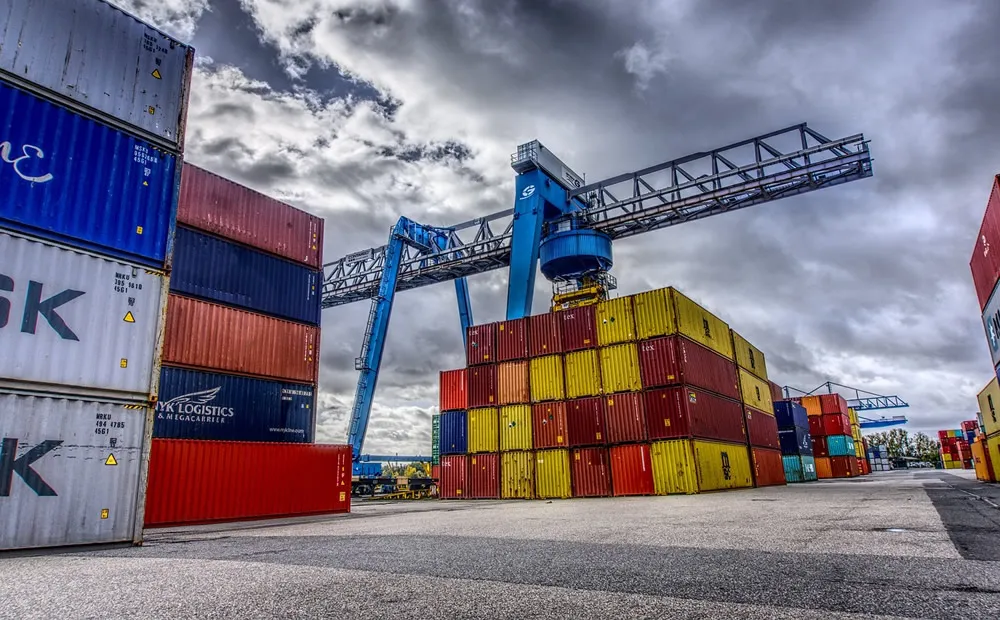
The first stage is preliminary communication and plan formulation. Suppose Mr. Shen is engaged in foreign trade business in Shenzhen and has a batch of goods to export to a certain country. However, direct export may face high tariffs or other trade barriers. At this point, he contacts Zhongmaoda. The professional team at Zhongmaoda will tailor a re-export plan for Mr. Shen based on the specific situation of his goods, such as product type and the trade policies of the destination country, selecting the most suitable third country and transportation route.
The next step is booking and shipping. After the plan is confirmed, Zhongmaoda will assist Mr. Shen in booking with the shipping company. The goods will depart from Shenzhen Port and be transported to the selected third country. During transportation, it is crucial to ensure the safety and timely arrival of the goods, which requires strict monitoring of the logistics process.
Upon arrival at the third country, the goods enter the transit operation stage. The goods are unloaded at the transit warehouse in the third country and undergo operations such as container changes or relabeling according to the pre-determined plan. These operations may seem simple, but they require strict adherence to local laws and regulations and relevant trade rules to ensure legality and compliance. For example, Mr. Shen once had a batch of goods whose labels did not meet the destination country's requirements. Zhongmaoda, during the transit in the third country, remanufactured and affixed the labels according to the destination country's standards.
Finally, there is secondary transportation and customs clearance delivery. The goods that have completed transit operations are loaded onto ships again and transported to the destination country. Simultaneously, Zhongmaoda will prepare the necessary customs clearance documents to assist the consignee in the destination country in smoothly clearing customs and taking delivery. In this process, the accuracy and completeness of documents are paramount, as any minor mistake can lead to customs clearance delays.
Why Choose Shenzhen for Third-Country Re-export Trade?
Shenzhen possesses unique advantages. It boasts developed port facilities, such as Yantian Port and Shekou Port, with large cargo throughput and global shipping routes, providing a convenient logistics foundation for re-export trade. Moreover, Shenzhen is home to numerous professional foreign trade service enterprises, like Zhongmaoda, which have rich experience and professional teams capable of providing comprehensive support for re-export trade. Additionally, Shenzhen's trade policies are relatively flexible, and the government provides significant support for new foreign trade formats, which is conducive to the development of re-export trade.
Risks and Countermeasures of Third-Country Re-export Trade
Of course, third-country re-export trade is not without risks. During transportation, force majeure factors may cause delays; during transit in the third country, improper operations may lead to penalties from local customs; customs clearance in the destination country may also result in cargo detention due to discrepancies in documents. In response, Zhongmaoda mitigates transportation risks by purchasing cargo insurance; strictly follows local regulations during transit operations; and communicates in advance with consignees in the destination country to ensure the accuracy of customs clearance documents, minimizing risks.
Third-country re-export trade in Shenzhen opens up new development paths for many foreign trade enterprises. When traditional trade methods encounter obstacles, this unique trade model is worth considering. If you are interested in foreign trade re-export, feel free to discuss it in depth with Zhongmaoda and embark on a new chapter of trade.

Recent Comments (0) 0
Leave a Reply