In today's globalized business wave, trade takes various forms, and re-export trade is undoubtedly one of the more mysterious among them. Perhaps many have only vaguely heard of it, but do not truly understand its operational intricacies. Today, let us delve into the topic of re-export trade together, and unveil its mysterious facade.
I. What Exactly Is Re-export Trade?
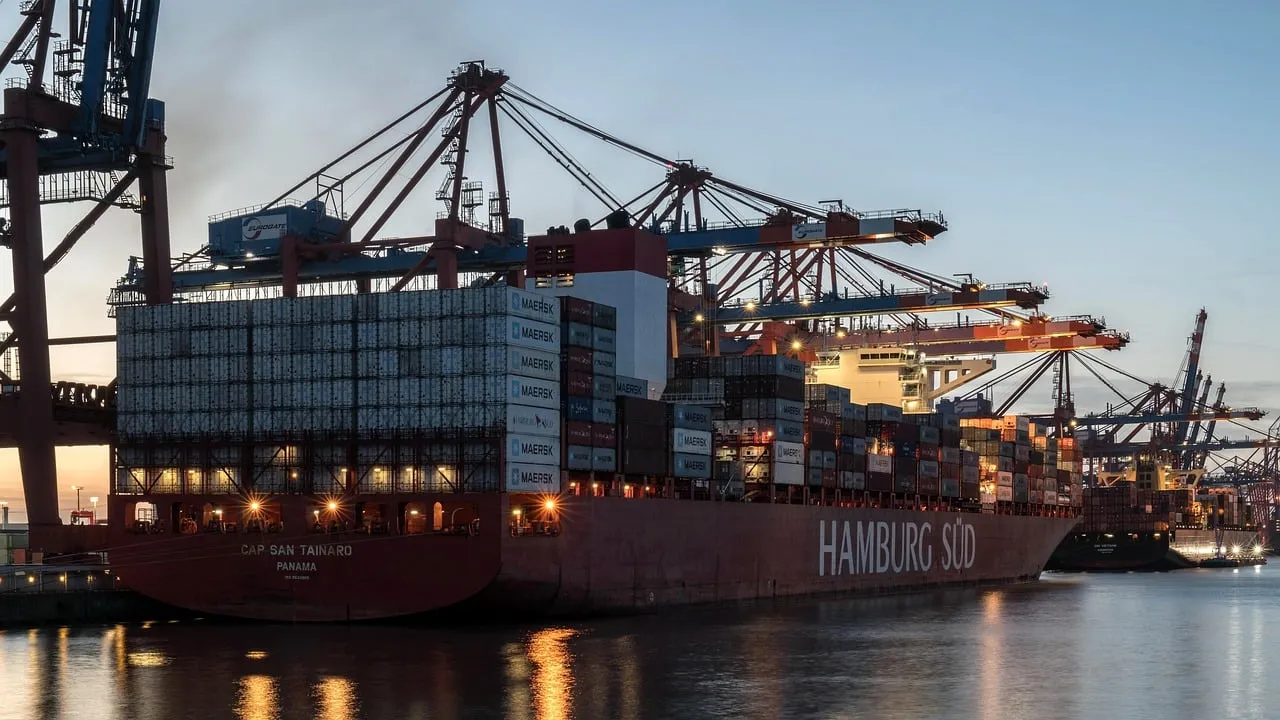
Re-export trade, simply put, is a trade method where a goods-producing country sells its goods to a re-export trader, who then sells the goods to a consuming country. It does not involve direct transactions between the producing country and the consuming country, but rather completes the circulation of goods through an intermediary re-export trader. For instance, Country A produces a batch of distinctive handicrafts, but due to certain trade policies or market channels, it cannot directly and smoothly sell these handicrafts to Country C. This is where Country B, where the re-export trader is located, comes into play. Country A first sells the handicrafts to the re-export trader in Country B, and then that trader resells them to Country C. In this way, the circulation of goods from the producing country to the consuming country is achieved through the form of re-export trade.
II. What Are the Advantages of Re-export Trade?
- First, it can effectively circumvent certain trade barriers. In international trade, countries often impose various tariff barriers, quota restrictions, and other measures to protect their domestic industries. Through re-export trade, by choosing a transit location with relatively lenient trade policies, it becomes possible to bypass these obstacles, allowing goods to enter target markets more smoothly.
- Second, re-export trade can expand market channels. For manufacturing enterprises in producing countries that have low international recognition or limited market channels, leveraging re-export traders' global sales networks and channel resources allows them to introduce their products to broader international markets and reach more potential consumers.
- Furthermore, from the perspective of re-export traders, by exploiting the price difference between buying low and selling high, they can achieve a certain profit margin. This is also a significant reason why many businesses are attracted to engaging in re-export trade.
III. Challenges Faced by Re-export Trade
However, re-export trade is not always smooth sailing; it also faces numerous challenges. On one hand, market risks are significant. Factors such as international market demand and price fluctuations can all impact the profitability of re-export trade. If re-export traders misjudge the market, purchasing large quantities of goods only to see market demand suddenly decline, they could face situations of inventory backlog and losses. On the other hand, the logistics chain is also quite complex, involving the transshipment, warehousing, and other processes of goods between different countries. Problems in any single link could lead to delays, damage to goods, and other issues, thereby affecting the smooth progression of trade. Moreover, trade regulations and policies in different countries are constantly changing, and re-export traders need to constantly monitor and adapt to these changes, otherwise, they might face penalties for non-compliance.
IV. Zhongmao Logistics' Exploration and Practice in Re-export Trade
In the field of re-export trade, Zhongmao Logistics has been actively exploring and continuously accumulating experience. With its professional team, Zhongmao Logistics deeply understands various countries' market conditions and trade policies, enabling it to accurately seize re-export trade opportunities. In terms of logistics, Zhongmao Logistics has established a comprehensive logistics system, ensuring the safe and timely delivery of goods during transit. At the same time, Zhongmao Logistics also focuses on risk control, effectively reducing the impact of market risks on re-export trade operations through precise market analysis and forecasting. Through these efforts, Zhongmao Logistics has gradually established a firm foothold in the re-export trade sector, providing high-quality re-export trade services to numerous clients.
Conclusion: Future Outlook for Re-export Trade
As an important component of international trade, re-export trade still holds vast development potential in the process of global economic integration. Despite facing numerous challenges, with the advancement of technology, continuous improvement of logistics systems, and gradual optimization of trade policies, re-export trade is expected to overcome difficulties and achieve better development. For companies engaged in re-export trade, such as Zhongmao Logistics, it is crucial to continuously enhance their professional capabilities and competitiveness to better adapt to market changes. So, dear readers, what are your thoughts on re-export trade? We welcome everyone to discuss it together.

Recent Comments (0) 0
Leave a Reply